AI Sleep Checklist: Simple Digital Steps for Better Rest
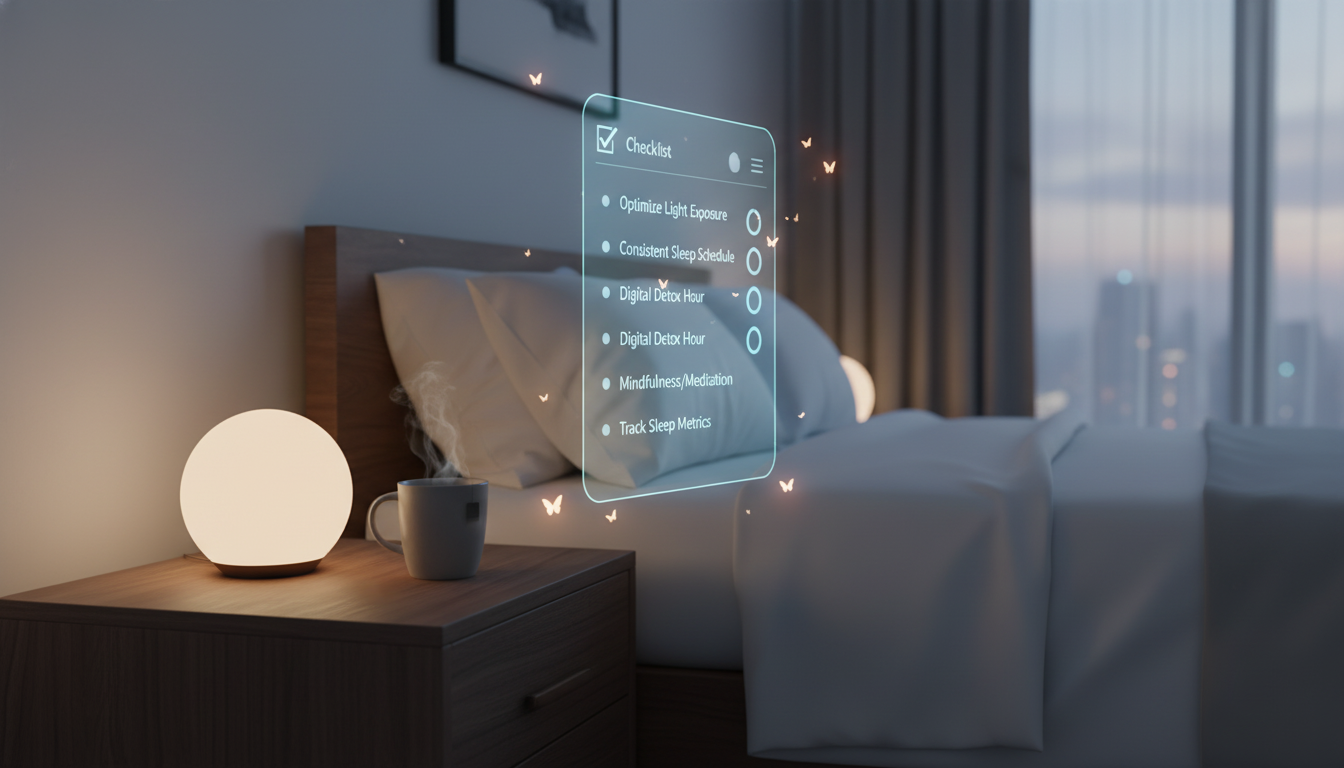
AI Sleep Smarts Checklist: A Practical Digital Guide to Better Rest
Better sleep usually comes from small, consistent changes—light exposure, timing, environment, and habits. A digital checklist makes those changes easier to apply and track, while AI-style recommendations help prioritize what to adjust first based on common sleep blockers like screen time, stress, temperature, and irregular schedules.
Sleep needs are personal, but the building blocks are widely shared: stable wake times, enough daytime light, smart caffeine timing, a calmer ramp-down at night, and a bedroom that supports recovery. For background on why sleep matters and what can interfere with it, see guidance from the CDC, the National Heart, Lung, and Blood Institute, and the American Academy of Sleep Medicine.
What a Sleep Optimization Checklist Helps With
- Turns vague goals (“sleep earlier”) into specific actions (“set a wind-down alarm 60 minutes before bed”).
- Creates a repeatable routine that reduces decision fatigue at night.
- Highlights high-impact levers: light, consistency, caffeine timing, bedroom conditions, and stress recovery.
- Makes progress measurable through simple checkmarks, notes, and weekly review.
- Helps spot patterns—what improves sleep onset, night awakenings, and morning grogginess.
Set a Baseline Before Changing Anything
A checklist works best when it starts with reality, not guesses. A short baseline helps separate “one bad night” from a repeatable pattern.
- Track for 3–7 days: bedtime, estimated time to fall asleep, awakenings, wake time, and energy level.
- Note key inputs: caffeine timing, alcohol, late meals, workouts, naps, and evening screen time.
- Identify the main pain point to solve first: trouble falling asleep, staying asleep, or waking too early.
- Choose one primary goal for the next week (for example: consistent wake time, fewer awakenings, less scrolling at night).
A Simple “AI-Style” Prioritization Rule for Sleep Changes
Think like a helpful algorithm: pick the smallest, most repeatable change with the highest chance of improving sleep quickly.
- Start with the change that is easiest to do daily and most likely to help within 3–5 nights.
- If sleep onset is the issue: prioritize light management, wind-down routine, and caffeine cutoff.
- If frequent awakenings are the issue: prioritize room temperature, noise control, alcohol timing, and stress downshift.
- If morning grogginess is the issue: prioritize consistent wake time and morning light exposure.
- Keep a short feedback loop: adjust one variable at a time for at least 4 nights before changing another.
Daytime Foundations That Improve Nighttime Sleep
Nighttime sleep often improves when the day sets you up for it. These items are “quiet wins” that make bedtime less of a battle.
- Set a consistent wake time (including weekends when possible) to anchor the body clock.
- Get bright outdoor light early in the day (even 10–20 minutes can help reinforce circadian timing).
- Move daily; earlier workouts often support easier sleep onset for many people.
- Use naps strategically: keep them short and earlier in the day if they disrupt nighttime sleep.
- Time caffeine: pick a cutoff that avoids lingering stimulation at bedtime.
Evening Wind-Down: A Checklist That’s Easy to Follow
A wind-down routine is less about perfection and more about predictability. The goal is to reduce stimulation and signal “downshift” to your body.
- Create a “landing zone” for the last 60–90 minutes: dim lights, calmer activities, and reduced stimulation.
- Choose 2–3 repeatable cues: warm shower, stretching, light reading, or a brief breathing practice.
- Set a screen boundary: reduce bright light and emotionally activating content close to bed.
- Plan tomorrow’s first task to reduce bedtime rumination.
- Keep the routine realistic—consistency beats perfection.
If “one more scroll” is your usual derailer, replace it with an easier default: a pre-set wind-down alarm and a short list of two calming options you actually enjoy.
Optimize the Sleep Environment (Quick Wins)
Common Sleep Disruptors and Simple Fixes
| Disruptor | What it can cause | Checklist fix to try tonight |
|---|---|---|
| Bright light late at night | Delayed sleepiness, longer time to fall asleep | Dim lights 60 minutes before bed; enable warmer screen settings |
| Inconsistent wake time | Jet-lag feeling, groggy mornings | Pick a stable wake time and stick to it for one week |
| Warm bedroom | More awakenings, restless sleep | Lower thermostat or use lighter bedding; consider a fan |
| Late caffeine | Racing thoughts, lighter sleep | Move last caffeine earlier; switch to decaf after cutoff |
| Phone in bed | Longer bedtime, mental stimulation | Charge phone outside the bedroom; use a simple alarm clock |
How to Use Digital Recommendations Without Overcomplicating Sleep
When to Get Extra Support
Digital Checklist Option for Daily Use
Suggested tools (in stock)
- AI Sleep Smarts Checklist | Digital Sleep Optimization Guide | AI Sleep Recommendations for Better Rest
- Rechargeable Sonic Electric Toothbrush with USB Charging & Replacement Heads (a quick, consistent hygiene cue that pairs well with a wind-down routine)
- Sonic Electric Toothbrush (another simple “same time, same steps” anchor for evenings)
FAQ
How long does it take to see results from a sleep checklist?
Give most changes 3–7 nights to show a clear trend. For circadian timing changes like a consistent wake time and morning light, 1–2 weeks often brings more noticeable stability.
What are the most important checklist items if falling asleep is the main problem?
Start with a consistent wake time, move your caffeine cutoff earlier, dim evening lighting, and follow a simple wind-down routine that reduces screen stimulation. Keep it repeatable and evaluate after at least four nights.
Can sleep trackers and AI recommendations replace medical advice?
They can help spot patterns and support habits, but they don’t diagnose medical conditions like sleep apnea or chronic insomnia. If symptoms are persistent, severe, or affect daytime function, a clinician is the safer next step.





Leave a comment