High-Speed RC Drift Car for Kids: Indoor Drift Guide
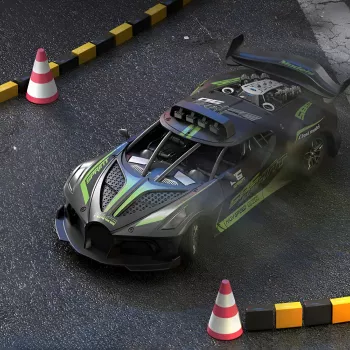
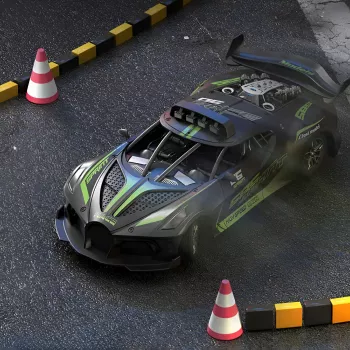
A drift-style RC car adds a fun challenge beyond simple forward-and-back driving: controlled slides, quick direction changes, and “track” play on smooth floors. This guide covers what matters for kids—easy handling, durable build, safe charging habits, and ways to set up a simple drift course at home—plus a quick spec checklist to help decide if this model fits the age and space.
What makes a drift RC car different
Unlike typical RC cars that focus on straight-line speed, drift RC cars are about controlled oversteer—sliding the rear end through a turn while keeping the car pointed where you want it to go. That makes the driving feel more like a skill toy than a pure “go fast” toy.
- Drift-focused handling emphasizes controlled slides on smooth surfaces like tile, laminate, and sealed concrete.
- Tires and steering response matter more than raw speed; drifting is about maintaining a slide through turns.
- Best play spaces are open, low-friction areas with minimal obstacles; outdoors can work on smooth pavement with enough room.
- Kids tend to enjoy drift cars most when they can practice repeatable turns and simple “racing lines.”
Who this toy is best for
A drift RC car is a strong match for kids who like improving at something over time. It’s also a nice option for families looking for indoor-friendly play that doesn’t require a big backyard.
- Kids who enjoy skill-based play: practicing turns, figure-eights, and lap challenges.
- Indoor-friendly households with smooth floors and a clear area to drive.
- Gift shoppers wanting an exciting RC experience without complex setup.
- Parents looking for a screen-free activity that encourages coordination and patience.
Key features to look for in a kids’ drift RC car
For kids, the “best” drift RC car is usually the one that feels predictable. Smooth steering, consistent throttle response, and a body that can handle bumps make practice sessions more fun (and less frustrating).
- Control simplicity: responsive steering and a controller layout that smaller hands can manage.
- Battery and charging: clear charging indicators and a routine that helps prevent overcharging.
- Durability: bump-resistant body, stable wheel alignment, and parts that tolerate curb taps and furniture bumps.
- Surface versatility: best on smooth flooring; some models also handle smooth outdoor pavement.
- Range and interference: stable connection and consistent response reduce frustration during play.
- Playtime expectations: shorter sessions are common; a second charge or spare battery (if available) can extend fun.
Quick checklist for evaluating a drift RC car for kids
| Feature | Why it matters for kids | What to confirm before buying |
|---|---|---|
| Steering response | Easier to learn turns and recover from spins | Turns smoothly without jerky input |
| Tires suited for drifting | Helps the car slide predictably on smooth floors | Works well on tile/laminate/sealed concrete |
| Battery charging routine | Reduces safety risks and battery wear | Charging time guidance and clear indicator |
| Build durability | Survives bumps and beginner mistakes | Body and wheels feel solid; stable alignment |
| Space needed | Prevents crashes and frustration | Enough open area for turns and figure-eights |
| Noise level | More comfortable indoor play | Acceptable for home use (especially evenings) |
How to set up a simple drift course at home
A home drift course doesn’t need special gear. The goal is to create gentle boundaries that encourage controlled turns without damaging furniture (or the car).
- Choose a safe surface: clear a smooth-floor area and remove breakables.
- Create soft boundaries: use painter’s tape lines, foam blocks, or empty boxes to form turns.
- Start with skill drills: straight-line acceleration and braking, slow circles, then figure-eights.
- Add fun challenges: “park in the box,” slalom around cups, or timed laps.
- Keep sessions short: quick rounds with breaks can reduce frustration and keep attention high.
Safety and care basics (battery, charging, and play area)
RC drift cars are generally straightforward to use, but the battery and charging routine deserve attention—especially with younger kids. For additional guidance, review the CPSC’s battery safety information and consider toy safety standards such as ASTM F963 (overview).
- Charge on a non-flammable surface and keep charging supervised, especially for younger kids.
- Let the car cool down before recharging after long runs.
- Store the car and controller away from heat and moisture.
- Check wheels and tires periodically; remove hair or debris that can wrap around axles.
- Use open areas away from stairs, pets, and busy walkways to prevent accidents.
Product spotlight: High-Speed RC Drift Car for Kids
If you’re looking for an affordable way to introduce drift-style driving, the High-Speed RC Drift Car for Kids – Electric Remote Control Racing Toy is designed for fast-paced practice and playful sliding turns. It’s a good fit for smooth indoor floors and can also be used outdoors on smooth pavement when there’s enough space to set up wider turns.
At-a-glance details
| Item | Details |
|---|---|
| Product | High-Speed RC Drift Car for Kids – Electric Remote Control Racing Toy |
| Price | 16.51 USD |
| Availability | In stock |
| Product page | View product |
Easy add-ons for gifting and everyday use
- Embroidery Daisy Pencil Case Large Capacity School Supplies Pouch for school supplies, travel, or keeping small accessories organized.
- Rechargeable Sonic Electric Toothbrush with USB Charging & Replacement Heads as a useful daily-care upgrade that’s easy to wrap with a toy gift.
Tips for teaching kids to drift (without frustration)
FAQ
Is a drift RC car safe for indoor use?
Yes, with basic precautions: clear a driving area, keep the car away from stairs and fragile items, supervise younger children, and follow safe charging habits.
What surfaces work best for drifting?
Smooth, low-friction surfaces like tile, laminate, or sealed concrete work best. Outdoors, smooth pavement is ideal; grass and thick carpet reduce drifting and can strain the motor.
How can longer play sessions be managed?
Plan shorter runs with breaks, charge only as directed, and consider models or bundles that support spare batteries if extended sessions are a priority.




Leave a comment