1600W Heavy-Duty Rotary Hammer Drill Guide
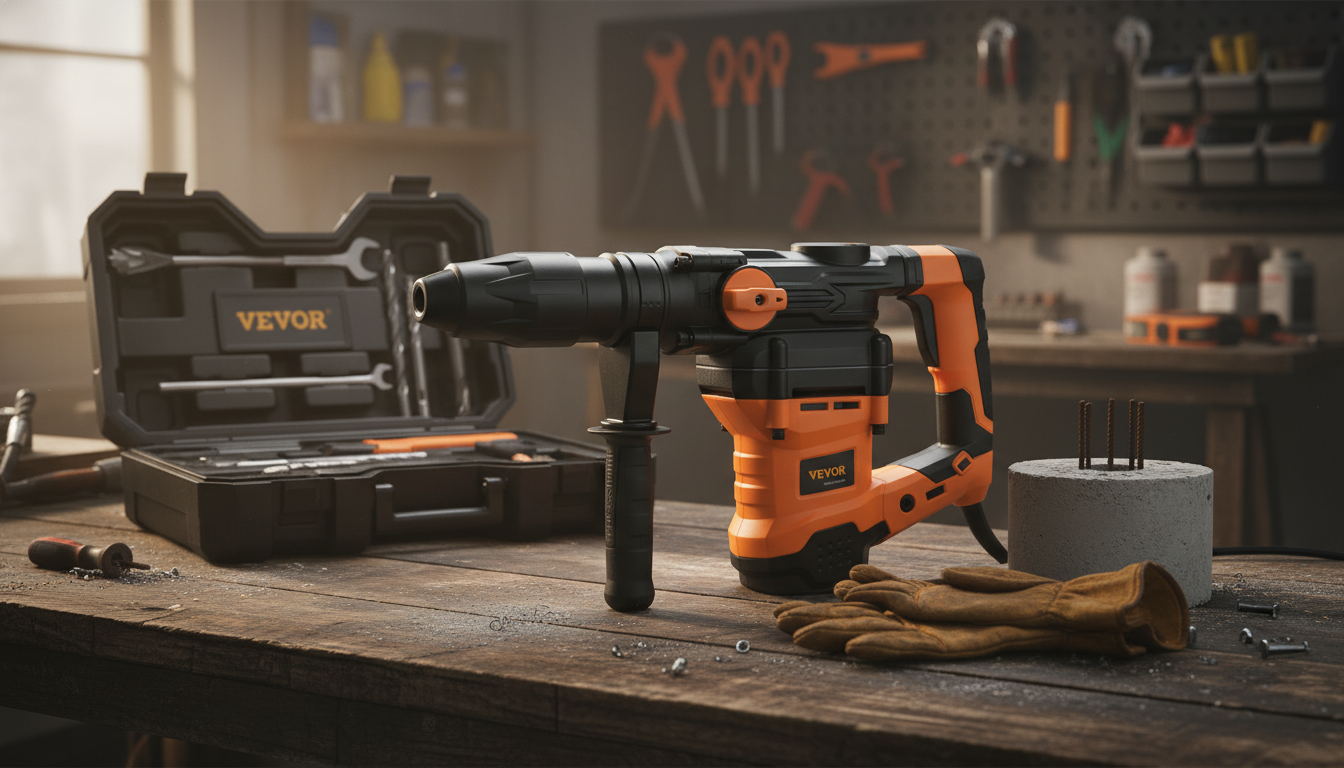
What a 1600W Rotary Hammer Drill Is Best At
A 1600W heavy-duty rotary hammer drill is built for the kind of concrete and masonry work that quickly overwhelms standard hammer drills. Think anchor holes for shelving and ledgers, dowel holes for repairs, conduit runs through block, and clean through-holes in brick or poured concrete. The power class matters most when the material is dense, the aggregate is hard, or the job calls for repeated holes that need to stay consistent from the first to the fiftieth.
Unlike a typical hammer drill that “vibrates” the bit forward, a rotary hammer’s impact mechanism delivers stronger, more decisive blows. That tends to reduce bit binding and the temptation to lean your body weight into the tool—especially helpful when drilling overhead or when the concrete mix is tougher than expected. Many models also add multiple modes (drill, hammer drill, and chisel), making the same tool useful for light demolition tasks like tile removal or chasing shallow channels in masonry.
Key Features That Matter on Heavy-Duty Jobs
When a rotary hammer is used for longer drilling runs or occasional chipping, comfort and control become just as important as raw wattage. Look for a combination of steady power delivery, vibration management, and safety features that help prevent sudden twist when a bit catches.
- Power and impact system: Higher wattage supports sustained drilling and chiseling without frequent cool-down breaks.
- Anti-vibration and grip design: Reduces hand and arm fatigue during overhead drilling or repetitive anchor holes.
- Clutch or torque-limiting protection: Helps reduce abrupt rotation if the bit binds, improving control and safety.
- Depth stop and auxiliary handle: Improves accuracy and repeatability for anchors and consistent embedment depth.
- Forward/reverse and variable speed: Useful for clean starts, controlled pilot holes, and backing out stuck bits.
Modes and Common Use-Cases
Hammer drilling mode
Use hammer drilling for anchors in concrete, brick, and stone. Pair the tool with quality carbide masonry bits, and let the impact do the work—too much downward force can slow progress and increase vibration.
Rotary-only drilling mode
Rotary-only is useful when the tool supports the right chuck/adapter for wood and metal bits. It can handle occasional holes in wood framing or thin metal, but it’s not a replacement for a dedicated drill press or heavy-duty metal drilling setup when steel gets thick.
Chiseling mode
Chiseling is a strong fit for tile removal, breaking thin mortar beds, knocking down small high spots, or opening channels for conduit. If angle adjustment is available, aligning the chisel without awkward wrist positions can make floor scraping and wall channeling noticeably easier.
Bit and Accessory Compatibility
Before buying bits, confirm the bit interface (many rotary hammers use SDS-style shanks). Matching the correct shank type helps avoid wobble, reduces wear on the chuck, and keeps impact energy transferring efficiently into the work.
- Choose the right bit for the material: Carbide-tipped masonry bits are standard for concrete. For reinforced concrete where rebar may be present, avoid generic bits that dull quickly.
- Clear dust on deep holes: Periodically pull the bit out while drilling to clear debris and reduce heat buildup.
- Pick the right chisel profile: Wide scaling chisels speed tile removal; pointed chisels focus force for localized breaking.
| Task | Recommended mode | Accessory tip |
|---|---|---|
| Concrete anchors (small to medium holes) | Hammer drilling | Carbide masonry bit; use depth stop for repeat holes |
| Through-holes in block/brick | Hammer drilling | Step up bit sizes gradually to reduce binding |
| Tile removal and mortar scraping | Chiseling | Use a wide chisel; keep the tool low-angle to avoid gouging |
| Chasing channels for conduit | Chiseling | Score lines first; use dust control for indoor work |
| Occasional drilling in wood/metal | Rotary-only (if supported) | Use correct bits and lower speed; avoid forcing the tool |
Handling, Safety, and Dust Control
- Use two-hand control: Keep one hand on the auxiliary handle to manage torque and maintain alignment.
- Wear the right PPE: Eye and hearing protection are essential, and a properly rated respirator helps with fine concrete dust.
- Control silica dust indoors: Use vacuum attachments or dust extraction when possible, and isolate the area to keep dust from spreading. For more detail, see OSHA’s respirable crystalline silica standard (construction) and NIOSH guidance on silica.
- Check for hidden hazards: Scan for electrical, plumbing, and rebar before drilling into walls or slabs.
- Let the tool work: Excess pressure can slow drilling, overheat the bit, and increase vibration exposure.
Care and Maintenance for Longer Tool Life
Product Options In Stock
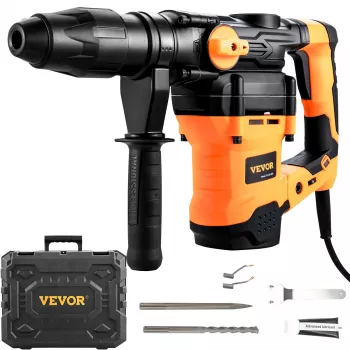
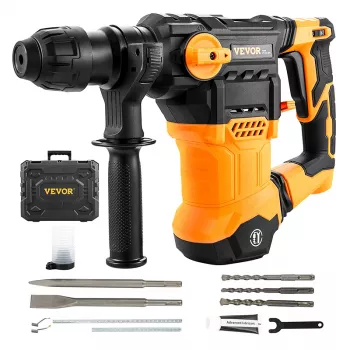
- 1600W Heavy-Duty Rotary Hammer Drill ($118.01) — A power-focused option for concrete drilling and chiseling tasks where speed and consistent impact matter.
- Rechargeable Sonic Electric Toothbrush with USB Charging & Replacement Heads ($43.67) — In stock now for everyday care needs.
- Sonic Electric Toothbrush ($81.32) — Another in-stock personal care option.
FAQ
What is the difference between a rotary hammer and a hammer drill?
A rotary hammer uses a stronger impact mechanism designed for concrete and masonry, delivering higher impact energy with less user effort. A hammer drill typically relies on a lighter mechanical “vibration” action and is better suited to smaller holes or softer masonry.
Can a heavy-duty rotary hammer drill be used for tile removal?
Yes—chiseling mode is well-suited for lifting tile and scraping thin mortar beds when paired with a wide chisel. Use a low angle and controlled passes to reduce gouging, and manage dust with a vacuum or containment when working indoors.
How can concrete dust be reduced while drilling indoors?
Use a vacuum attachment or dust extraction whenever possible and wear a properly rated respirator for fine dust. Isolate the work area with plastic sheeting and clean with a vacuum rather than dry sweeping to keep dust from becoming airborne again.




Leave a comment