Vanity Makeup Mirror with Lights: 3-Color LED + 10X
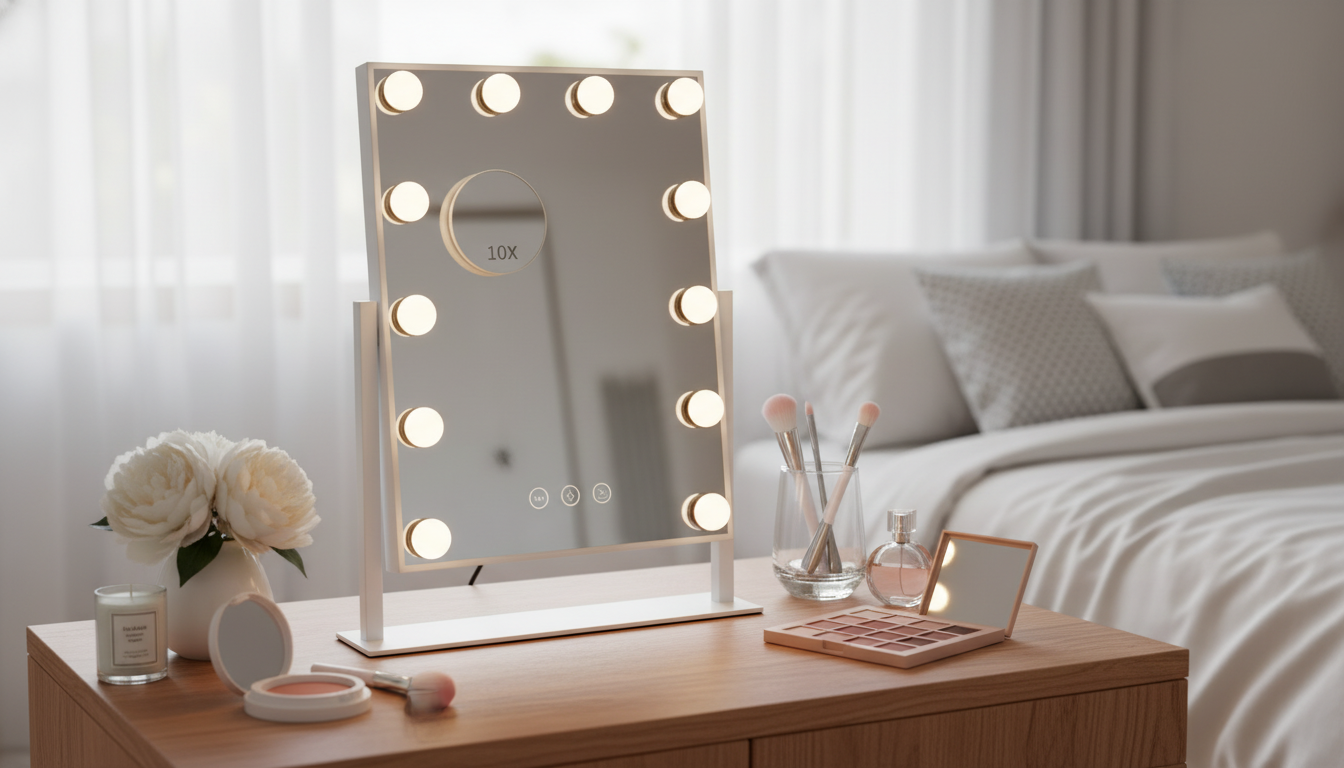
Vanity Makeup Mirror with Lights: A Small Upgrade That Changes Your Results
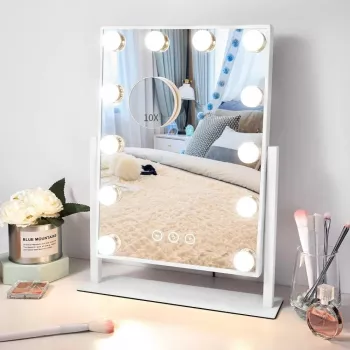
A well-lit mirror can change how makeup blends, how evenly skincare is applied, and how confidently details like eyeliner or brow shaping turn out. The Vanity Makeup Mirror with Lights – 3-Color LED, 10X Magnification, Touch Control is built for real-life routines where lighting shifts from room to room and from morning to night. With three adjustable LED tones, 10X magnification for precision, and simple touch control, it helps create more consistent results—whether you’re getting ready for daylight errands, office lighting, or an evening event.
What this mirror is designed to solve
Many makeup “mysteries” are really lighting issues. Yellow bathroom bulbs can warm everything up and hide blending edges, while dim bedroom lamps can make you over-apply foundation, bronzer, or concealer just to see what you’re doing.
- Reduces uneven foundation and contouring caused by yellow bathroom bulbs or low light.
- Helps spot blending edges, stray hairs, and fine lines during close-up tasks with 10X magnification.
- Makes quick lighting adjustments possible without fumbling for switches thanks to touch control.
- Supports consistent results when transitioning between daylight, office lighting, and evening environments.
Lighting affects color perception and what your eyes interpret as “even.” If you’ve ever stepped outside and suddenly noticed a foundation line or unblended blush, switching light tones before leaving can prevent surprises. For a simple overview of how light characteristics influence what you see, the U.S. Department of Energy has a helpful primer on lighting and color characteristics.
Three light colors and when to use each
Different light tones serve different purposes. Instead of guessing, you can use each mode intentionally throughout your routine—complexion, detail work, and final check.
- Warm light: flattering for evening looks and ambient indoor lighting; useful for checking blush and bronzer warmth.
- Neutral light: balanced for everyday makeup; helps evaluate truer foundation matching.
- Cool light: closer to many bright task lights; helpful for precision work like eyeliner symmetry and concealer placement.
- Switching tones before leaving helps avoid surprises moving from a warm room into daylight or office lighting.
Lighting modes at a glance
| Light tone | Best for | What it helps reveal |
|---|---|---|
| Warm | Evening makeup, cozy indoor rooms | Overly cool foundation, harsh contour lines |
| Neutral | Daily routines, balanced checks | More accurate shade matching and blending |
| Cool | Detail work, bright environments | Fine edges, uneven concealer, eyeliner gaps |
10X magnification: how to use it comfortably
10X magnification is best treated like a “precision tool,” not a full-face view. It’s ideal for tasks where a millimeter matters, but it can feel intense if you try to do everything under maximum zoom.
- Use 10X for detail steps: tweezing, brow mapping, eyeliner close work, lash placement, and checking lipstick lines.
- Keep your face at a comfortable distance; strong magnification can look distorted if you’re too close or too far.
- Pair magnification with moderate brightness to reduce glare that can exaggerate texture.
- Switch back to a standard viewing distance to confirm overall balance after finishing detail work.
If your routine includes skincare steps before makeup, a clear, well-lit view can also help with even application (especially around the nose, jawline, and hairline). For dermatologist-backed basics on keeping routines gentle and consistent, the American Academy of Dermatology offers a solid guide to skin care basics.
Touch control: faster adjustments during routines
Touch controls make lighting changes feel like part of the flow, not a disruption. Instead of stopping mid-application to reach for a switch, you can adapt the mirror to what you’re doing in seconds.
- Tap to cycle between light tones as your routine moves from complexion to eyes to finishing touches.
- Adjust brightness to match the room rather than overpower it; this helps avoid applying too much product.
- Use a slightly dimmer setting for “final look” checks to simulate real-world lighting conditions.
- Keep the mirror surface clean for reliable touch responsiveness and a clearer reflection.
Placement tips for more accurate makeup checks
Even the best vanity mirror performs better with smart placement. A few small adjustments can reduce shadows and help your makeup look more even in real life.
- Set the mirror where light hits your face evenly—avoid strong overhead shadows from ceiling fixtures.
- Face a window when possible; use neutral or cool mode to complement natural light rather than compete with it.
- If used in a bathroom, keep it away from direct splash zones and wipe off condensation promptly.
- For desk vanities, keep the mirror at eye level to reduce neck strain during longer routines.
Care and upkeep for clear reflection and consistent lighting
A mirror can only be as “high definition” as its surface. Streaks and residue can mimic texture, patchiness, or uneven blending—leading you to over-correct.
Who it suits best
In-stock picks to upgrade your daily routine
- Vanity Makeup Mirror with Lights – 3-Color LED, 10X Magnification, Touch Control
- Rechargeable Sonic Electric Toothbrush with USB Charging & Replacement Heads
- Sonic Electric Toothbrush
FAQ
Which light color is best for everyday makeup?
Neutral light is the best default for everyday makeup because it’s the most balanced for checking foundation match and overall blending. Use warm light to preview softer evening lighting, and switch to cool light for quick precision checks before you leave.
Is 10X magnification too strong for full-face makeup?
10X is best for detail steps like brows, eyeliner, lash placement, and lip edges, not for judging the full face. After detail work, step back to a normal viewing distance to confirm overall balance and symmetry.
How bright should the mirror be to avoid over-applying makeup?
Aim to match the mirror brightness to your room rather than blasting maximum light, which can lead to using more product than needed. Apply makeup at a moderate setting, then do a final check with slightly dimmer light to better mimic real-world conditions.



Leave a comment