Turtle Balance Stepping Stones: Non-Slip Kids Play
Turtle Balance Stepping Stones: Non-Slip Play That Builds Coordination
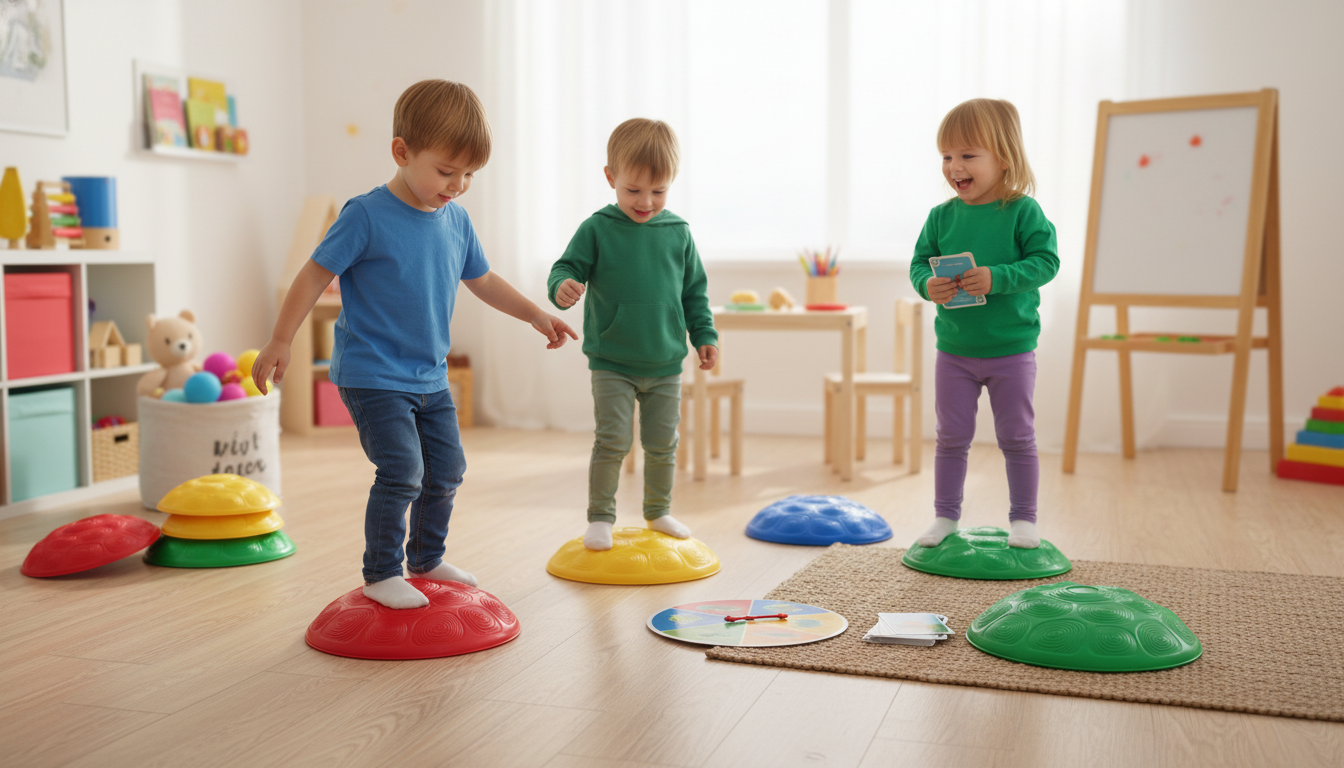
Turtle-themed balance stepping stones turn ordinary floor space into an active play zone where kids can hop, step, and pause to practice balance and body control. With a non-slip design and six pieces to arrange into endless paths, these stones work for indoor movement breaks, outdoor games, and simple obstacle courses that build coordination through play.
Many families aim to weave more movement into the day, and health organizations encourage regular activity for children. The CDC’s physical activity guidance for children and the American Academy of Pediatrics resources on fitness both emphasize making active play a consistent habit—stepping-stone games are an easy, low-tech way to do that at home or in group settings.
What’s Included and Who It’s For
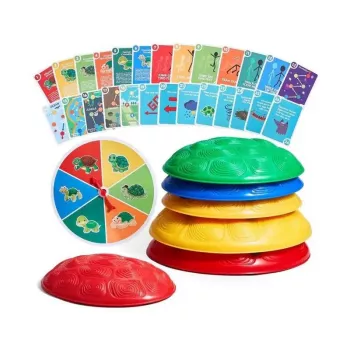
- Six turtle-shaped stepping stones designed for kids’ balance and coordination games.
- Best for children who enjoy active play, hopping games, and obstacle-course challenges.
- Useful for families, playrooms, classrooms, and therapy-style movement activities.
- Works as a quick setup option for rainy days or short bursts of energy between quieter tasks.
If you’re shopping for a ready-to-go set, the 6-Piece Kids Turtle Balance Stepping Stones with Non-Slip Design for Coordination Games provides a simple, kid-friendly way to create new paths every time you play.
Why Balance Stepping Stones Help Coordination
Balance games look like pure fun, but they naturally train foundational movement skills that show up in sports, playground play, and everyday confidence.
- Gross motor skill practice: stepping, hopping, landing softly, and stopping under control.
- Proprioception and spatial awareness: kids judge distance, choose foot placement, and adapt when the path changes.
- Bilateral coordination: alternating lead foot, turning, cross-stepping, and switching direction helps both sides of the body work together.
- Attention and rule-following: simple cues like “pause on every turtle” or “no floor allowed” add focus without feeling like drills.
- Easy to scale: widen or shorten spacing, add time limits focused on control, or layer in new movement rules as skills grow.
Non-Slip Design and Safe Setup Tips
- Place stones on a flat surface; keep play away from stairs, sharp corners, and hard furniture edges.
- For indoor play, clear a lane and leave a safe “step off” area if a child loses balance.
- For outdoor play, choose dry, even ground and avoid slick decks or wet tile.
- Start with short spacing and two-foot landings; increase distance as confidence improves.
- Use adult supervision for younger children and for jumping variations.
One helpful rule is “quiet feet”: kids try to land softly and steady themselves before the next move. It naturally slows things down and rewards control over speed.
Coordination Games to Play with Turtle Stepping Stones
- Turtle Trail: arrange a winding path; kids walk heel-to-toe across each stone.
- Color/Number Rules (if stones vary): call out which turtle to step on next; add “no repeats.”
- Freeze Balance: pause on each stone for 3 seconds on one foot before stepping forward.
- Animal Moves: hop like a frog between stones, crab-walk around a stone, then step on.
- Memory Path: set a sequence of stones; kids repeat it in order without touching the floor.
- Team Relay: two kids alternate turns; each must land quietly and keep balance before tagging.
| Game | How to Play | Make It Easier | Make It Harder |
|---|---|---|---|
| Turtle Trail Walk | Walk stone-to-stone without stepping on the floor | Place stones close together; allow two-foot landings | Increase gaps; add turns; require quiet landings |
| Freeze Balance | Hold a balance pose on each stone before moving on | Hold for 1–2 seconds; allow arms wide | Hold for 5 seconds; single-leg holds only |
| Memory Path | Copy a demonstrated stepping sequence | Use 3 stones; repeat slowly | Use all 6; add time limit or reverse order |
| Obstacle Add-Ons | Add cones or pillows to walk around between stones | One obstacle; slow pace | Multiple obstacles; include backward steps |
Indoor and Outdoor Use Ideas
- Indoor movement break: set a short path across a hallway or open living room area.
- Playroom circuit: pair stones with a soft mat for jumps and a taped line for “tightrope” walking.
- Backyard challenge: use stones as “safe islands” in a pretend lava game.
- Classroom station: rotate small groups through a stepping pattern with a balance pause on each turtle.
- Party game: create a timed course, but score “control points” (steady landings, no rushing) rather than pure speed.
Care, Storage, and Longevity
Product Snapshot
More In-Stock Picks
- 6-Piece Kids Turtle Balance Stepping Stones with Non-Slip Design for Coordination Games ($25.82)
- Embroidery Daisy Pencil Case Large Capacity School Supplies Pouch ($12.67) for keeping small game cards, timers, or activity prompts organized.
- Rechargeable Sonic Electric Toothbrush with USB Charging & Replacement Heads ($43.67) as a practical daily essential to round out a family cart.
FAQ
What age is appropriate for kids balance stepping stones?
Many kids can start around ages 3–8+, but readiness depends on balance skills and how closely an adult can supervise. For younger children, begin with close spacing and two-foot landings, then gradually increase the challenge as they gain confidence.
Can these stepping stones be used indoors without damaging floors?
They can be used indoors on flat surfaces when the area is clear and the stone bases are clean and free of grit. Avoid wet floors and check for debris underneath that could scratch or cause sliding.
How do you make stepping stone games more challenging as kids improve?
Increase the distance between stones, add single-leg pauses, or introduce “control-first” time challenges (steady landings before moving on). You can also add memory sequences, backward steps, and simple obstacles while keeping safety rules and supervision in place.






Leave a comment