Paisley Ascot Cravat Set: Cufflinks & Pocket Square
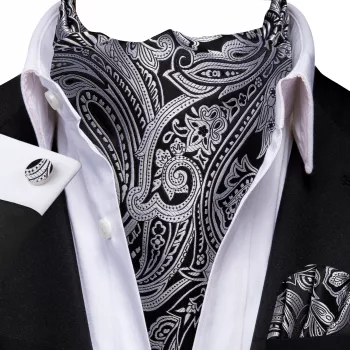
Men’s Luxury Paisley Ascot Cravat Set with Cufflinks & Handkerchief
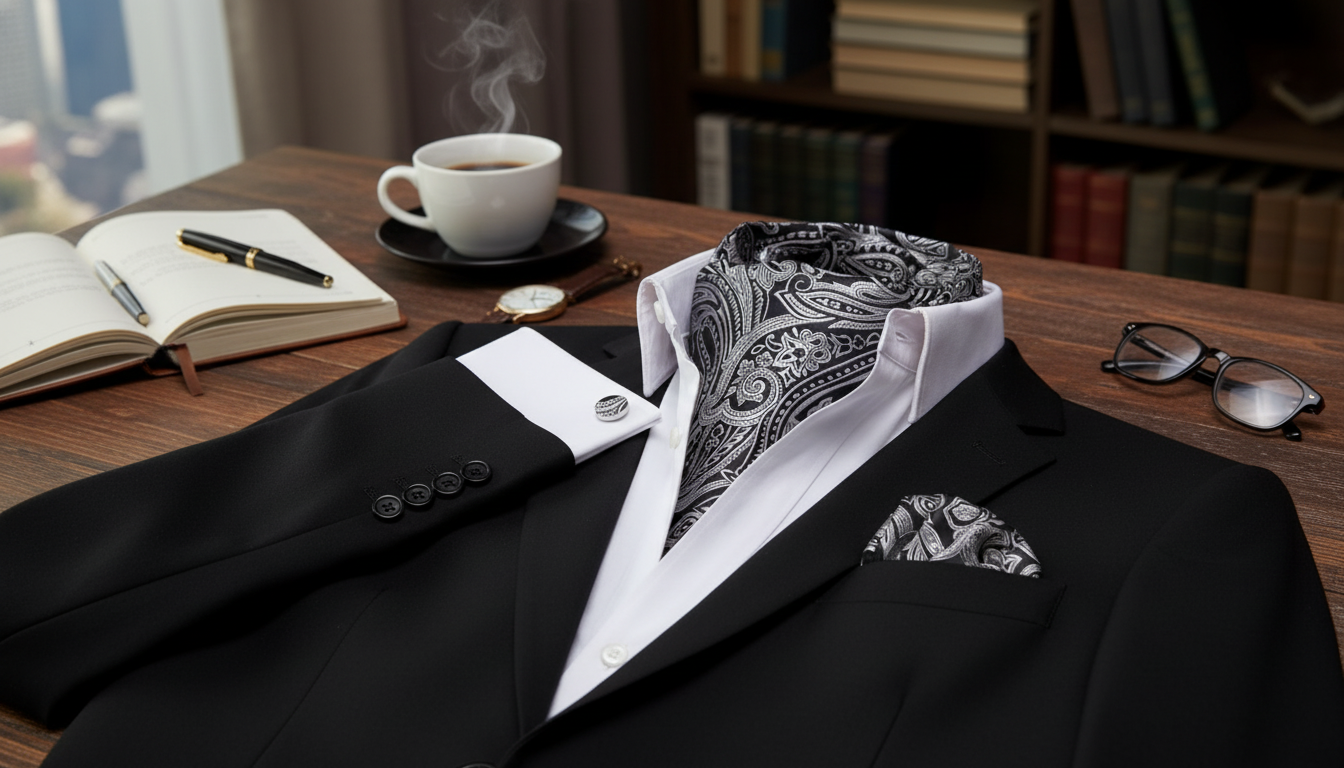
A paisley ascot set brings a polished, old-world finish to formalwear without feeling stiff. With a coordinated cravat, cufflinks, and pocket square, the look comes together quickly for weddings, galas, and evening events—especially when color, collar style, and folding details are chosen with care. Paisley’s swirling motif adds depth at the collar and reads richly in person and on camera, making it a smart choice when a standard tie feels too expected. For more guidance, see Men’s Ties, Cummerbunds & Pocket Squares – Revain.
What’s Included and Why the Set Works
A matching set removes the usual trial-and-error of pairing patterns and metals. Each piece plays a specific role, and together they create a balanced “top-to-toe” finish that looks intentional. For further reading, see A Dictionary of Men’s Wear – Project Gutenberg.
- Ascot/cravat: The statement piece that frames the face and fills open collar space elegantly, especially under a blazer or waistcoat.
- Cufflinks: A small, high-impact detail that ties the look to the wrist and watch line, sharpening the overall silhouette.
- Handkerchief (pocket square): Adds balance at chest level and helps coordinate color without relying on extra accessories.
- Coordinated patterning: Reduces guesswork when building a complete formal outfit, so you can focus on fit and grooming.
- Versatile formality: Ideal for dressing up a suit, a tuxedo alternative, or a vest-and-blazer combination.
If you like the tradition behind neckwear and how it evolved across dress codes, the overview at Encyclopaedia Britannica — Necktie offers helpful context on how neckwear fits into formal style history.
When to Wear a Paisley Ascot
Paisley can be classic or bold depending on scale and color. It shines when the event is dressy enough to reward details, but flexible enough to welcome personality.
- Weddings: Pairs well with three-piece suits, morning suits, or dressy blazers (especially for guests and groomsmen).
- Black-tie optional events: A refined alternative to a standard necktie when the dress code allows character.
- Cocktail evenings and formal dinners: Looks elevated with darker jackets and crisp shirts.
- Themed events and vintage-inspired styling: Paisley suits classic, heritage aesthetics without looking like a costume.
- Photography-heavy occasions: The pattern adds depth and texture on camera, helping the outfit read “finished.”
For practical, traditional guidance on how an ascot is typically worn and styled, Gentleman’s Gazette — Ascot Tie Guide is a useful reference point.
How to Match Color and Pattern Without Overdoing It
The goal is to let paisley look luxurious, not loud. A few simple rules keep the outfit cohesive, even if the pattern has multiple colors.
- Let the ascot lead: Keep the shirt solid and the jacket fabric relatively calm when the paisley is bold.
- Use the pocket square as a supporting note: Echo one color from the ascot rather than matching the entire pattern.
- Choose cufflinks thoughtfully: Complement metal tones in belts, watches, and tie bars (if worn) for a clean, consistent finish.
- If the suit has a pattern: When wearing checks or pinstripes, choose a smaller-scale paisley and limit other prints.
- Safer pairings: Navy, charcoal, and black suits; white or pale blue shirts; minimal lapel accessories.
A reliable approach is to pick one “bridge” color in the paisley (burgundy, gold, silver, or deep blue) and repeat it once—either at the pocket or at the wrist—then stop there. That restraint reads confident and formal.
Styling Guide: Shirt Collars, Knots, and Pocket Square Folds
Ascots look best when the collar supports the shape and the knot sits neatly without bulk. Small adjustments—like collar type and fold choice—make the difference between “costume” and “cultivated.”
Collars that flatter an ascot
Classic ascot arrangement
Pocket square folds that pair well with paisley
| Occasion | Jacket/Suit | Shirt | Pocket Square | Shoes |
|---|---|---|---|---|
| Wedding guest | Navy or charcoal suit | White or pale blue | Presidential fold, pick one accent color | Black or dark brown oxfords |
| Evening cocktail | Black blazer or tuxedo-style jacket | White spread-collar | Puff fold for texture | Black loafers or oxfords |
| Vintage-inspired | Three-piece or tweed blazer | Cream or light blue | Presidential fold, minimal contrast | Brogues or derbies |
Fit, Comfort, and Finishing Details to Look For
Care and Storage for Long-Lasting Shape
Featured Set
Men’s Luxury Paisley Ascot Cravat Set with Cufflinks & Handkerchief is a coordinated trio designed to simplify formal styling while adding pattern and color at the collar and pocket. It’s a practical way to build a complete look quickly for weddings, dinners, and special events—without trying to match separate pieces under time pressure.
| Item | Details |
|---|---|
| Name | Men’s Luxury Paisley Ascot Cravat Set with Cufflinks & Handkerchief |
| Price | 26.97 USD |
| Availability | In stock |
| Includes | Ascot/cravat, cufflinks, handkerchief |
Also in stock (useful add-ons for event prep)
- Sonic Electric Toothbrush
- Rechargeable Sonic Electric Toothbrush with USB Charging & Replacement Heads
FAQ
What is the difference between an ascot and a cravat?
In modern menswear, the terms often overlap, and many retailers use “ascot” and “cravat” interchangeably. Traditionally, a cravat refers broadly to neckwear styles descended from early European neck cloths, while an ascot commonly describes a wider, formal neckpiece worn under an open collar or for dress occasions.
Can a paisley ascot be worn with a patterned suit?
Yes—use scale contrast and keep one pattern dominant. Choose a smaller-scale paisley if the suit has checks or stripes, keep the shirt solid, and coordinate with one repeated accent color rather than multiple competing prints.
How do cufflinks and a pocket square coordinate without looking too matched?
Match metal tones across accessories (watch, belt hardware, and cufflinks), and let the pocket square echo a single color from the ascot instead of duplicating the same pattern. A simple fold keeps the chest area clean and prevents the look from feeling overly “set.”


Leave a comment