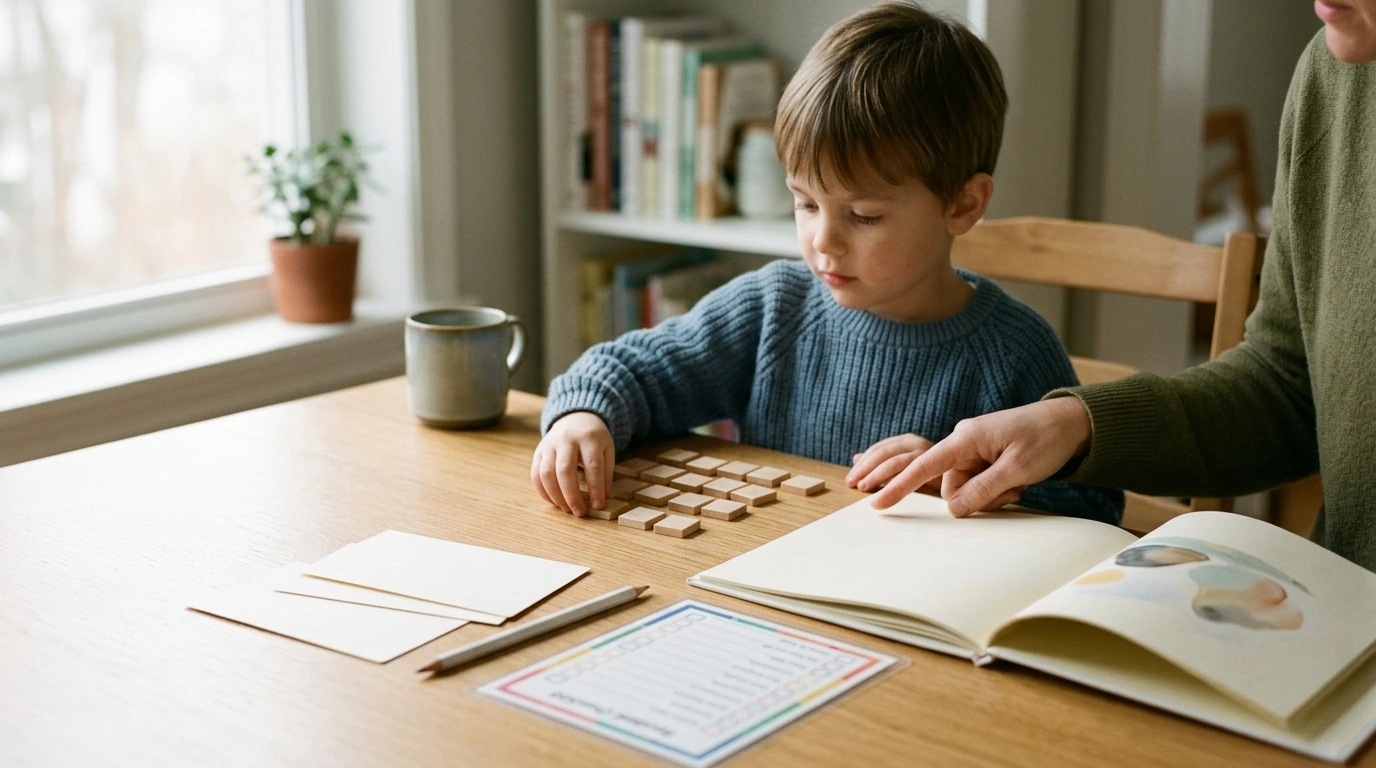
A calm, repeatable routine helps kids learn to read with confidence—without power struggles. This step-by-step checklist breaks early reading into small skills (sounds, blending, simple books, and fluency) so parents and homeschool families can track progress, spot gaps early, and keep lessons short, upbeat, and consistent.
Before diving into letter cards and early readers, set up a “small wins” environment. It keeps reading practice steady, even on busy days.
If you’d like a ready-made routine you can print and reuse, the Fun & Easy Checklist: Teach Kids to Read Without Tears (Printable Guide) helps keep each lesson short, clear, and predictable.
Reading works best when skills build in a dependable sequence. This order keeps children from “jumping ahead” into books that require patterns they haven’t practiced yet.
| Skill | A quick practice idea (5 minutes) | Ready to move on when… |
|---|---|---|
| Letter sounds | Pick 5 letters; say sound, trace, and find the letter on a page | Recognizes 4/5 sounds across 2–3 days |
| Blending | Tap 3 sound boxes, then slide finger to blend the word | Blends 8/10 CVC words without guessing |
| Decodable sentences | Read 2–4 short sentences; point to each word | Reads with steady pace and few prompts |
| High-frequency words | 2-word review: look, say, use in a sentence | Recognizes instantly in books 3 days in a row |
| Fluency rereads | Reread the same page twice; aim for smoothness | Second read is smoother and more confident |
| Comprehension | Ask: “Who/what? Where? What happened?” | Answers with a detail from the text |
For a research-aligned approach to foundational reading skills, see the National Reading Panel report and the International Dyslexia Association overview of Structured Literacy.
The goal is skill-building with a light mood—not a “show” where kids feel judged. Keep the playful parts short and tied to the exact skill you’re practicing.
Keeping materials tidy helps lessons start faster. A simple organizer like the Embroidery Daisy Pencil Case (Large Capacity) can hold letter tiles, a few markers, and sound cards so you’re not hunting for supplies when attention is highest.
For a clear overview of phonics and early decoding, Reading Rockets: Phonics Basics is a helpful reference.
If you want an easy, parent-friendly layout you can reuse year after year, the Fun & Easy Checklist: Teach Kids to Read Without Tears! (Step-by-Step Printable Guide) turns the skill sequence into a simple daily plan.
A simple, reliable sequence is: print awareness → letter sounds → phonemic awareness → blending → decodable sentences → a few high-frequency words → fluency rereads → comprehension and spelling support.
Aim for 10–15 minutes of focused skill practice plus a short decodable read. If frustration rises, end early and return the next day—short, consistent sessions add up quickly.
Switch to truly decodable texts, point under each letter, and slow the blend so your child can hear the word come together. Reduce picture reliance and add quick word-building practice so decoding becomes the default habit.






Leave a comment