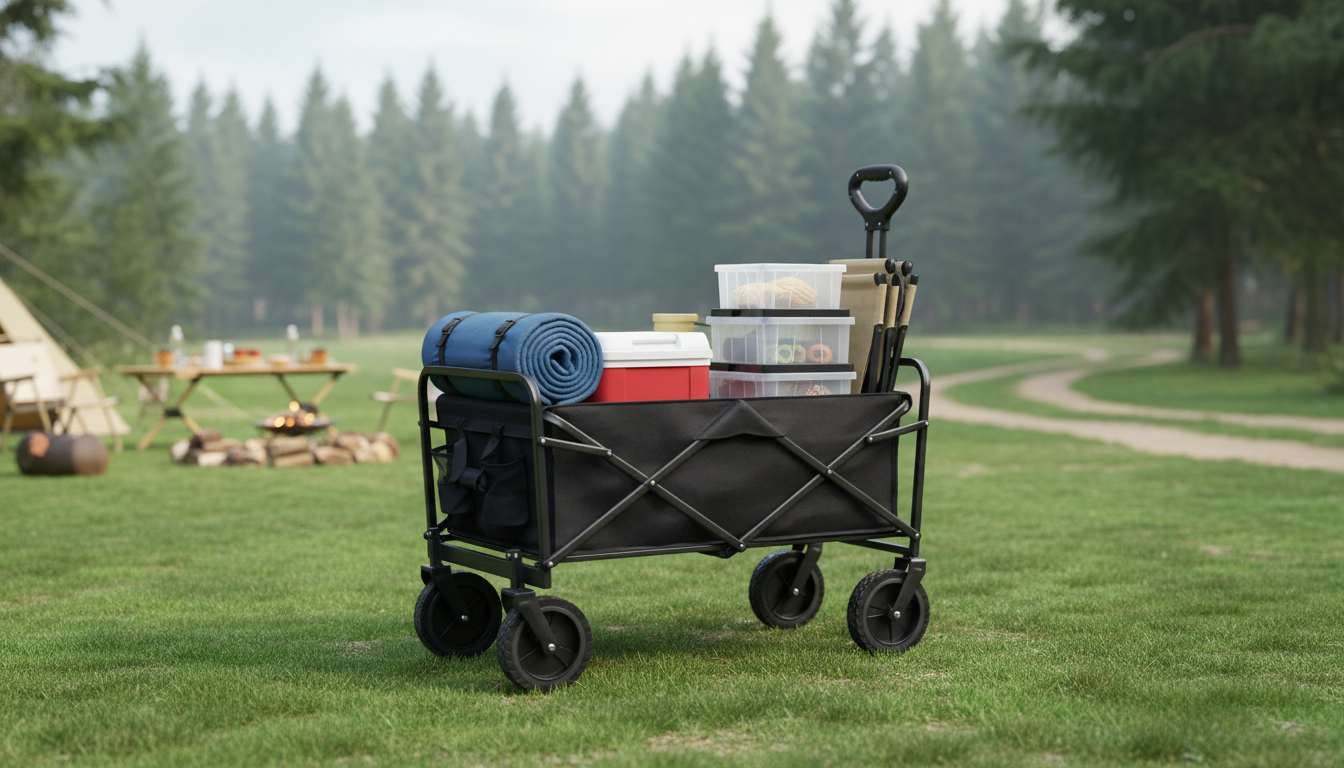
A collapsible outdoor utility wagon makes hauling gear easier for beach days, camping trips, gardening runs, and event setup—without taking up much storage space. This guide breaks down capacity, frame strength, wheel performance, folding convenience, and practical safety tips so the cart fits real-world hauling needs.
A folding outdoor wagon is one of those tools that earns its keep fast because it replaces multiple carry trips with one controlled pull. It’s especially helpful when items are bulky, awkward, or hard to balance in your arms.
“Large-capacity” sounds straightforward, but usability depends on how the load feels while rolling—not just how much you can stack in the bed.
| Typical load | Approx. weight | Notes for smoother pulling |
|---|---|---|
| Full cooler + ice + drinks | 35–70 lb | Place centered; secure lid; avoid stacking soft items on top |
| Camping tote + chair bag + canopy bag | 25–60 lb | Use straps or bungees for long items |
| 2–4 bags of mulch/soil (varies) | 40–160 lb | Keep low; avoid steep slopes; consider two trips if terrain is rough |
| Beach kit (towels, toys, umbrella) | 15–40 lb | Wider wheels help; pack heavier items closest to axle area |
| Sports gear bin + water jug | 20–60 lb | Prevent shifting by filling gaps with smaller bags |
Two wagons can look similar online yet age very differently after repeated folding, curb bumps, and heavier weekend loads. The difference usually comes down to frame stiffness and how well the stress points are reinforced.
Wheel design influences the “effort per pound” more than most people expect. A wagon can have a strong frame and still feel frustrating if the wheels sink or scrub during turns.
| Check | What to look for | Why it matters |
|---|---|---|
| Wheels | No wobble, spins freely | Reduces drag and uneven wear |
| Axles/bolts | Tight, no rattling | Prevents sudden failure under load |
| Handle | Locks and pivots smoothly | Improves control on turns |
| Bed fabric | No tears, seams intact | Stops blowouts when loaded |
| Fold/locks | Opens square, stays open | Avoids collapse during use |
Heavy hauling is easier with a wagon, but safe loading and controlled pulling still matter—especially around slopes, crowds, and uneven paths. For general lifting ergonomics, review guidance from NIOSH and OSHA.
It’s also smart to stay aware of product safety notices from the U.S. Consumer Product Safety Commission (CPSC), especially for frequently used gear.
Capacity depends on the model’s rated load, frame and axle design, and the terrain you’re pulling across. Staying under the stated limit helps protect wheels and hinges, and it’s wise to reduce the load further on sand, gravel, or steep ground.
They can be, especially when wheel width helps prevent sinking on soft sand and your load is packed low and centered. After beach use, rinsing sand from wheels and hinge areas helps keep folding and rolling smooth.
Clean off grit, let the fabric and frame fully dry, then fold and store it in a cool, dry place. Using the strap or cover (if included) helps prevent the folded frame from rubbing and wearing the fabric during transport or storage.





Leave a comment