The Ultimate Hand-Washing Checklist for Delicate Fabrics
Delicate fabrics keep their shape, color, and texture longer when they’re washed gently and consistently. Use the checklist below to protect fibers like silk, lace, cashmere, fine knits, and embellished pieces—without overthinking each wash day.
Before You Start: Fabric Triage and Prep
- Read the care label and note water temperature limits, “do not wring,” and drying instructions. For background on why labels matter (and what they’re required to communicate), see the Federal Trade Commission’s care labeling guidance.
- Sort by color (lights/darks/brights) and by fabric type (silk with silk, knits with knits) to reduce friction and dye transfer.
- Test for colorfastness on an inside seam using a damp white cloth; stop if dye transfers.
- Remove detachable accessories (belts, pins) and empty pockets; close hooks and zippers to prevent snags.
- Treat visible spots before soaking: blot (don’t rub) and use a small amount of delicate-safe detergent diluted in water.
- Protect fragile trims (lace edges, beading) by turning garments inside out where possible.
Set Up Your Hand-Wash Station
- Choose a clean basin/sink and rinse away any residue that could redeposit onto fabric (leftover cleaner can cause stiffness or spotting).
- Use cool to lukewarm water unless the label specifies cold-only; hot water can shrink protein fibers and set stains.
- Pick a gentle detergent formulated for delicates; avoid chlorine bleach and harsh stain removers that can weaken fibers.
- Keep a soft towel nearby for blotting and rolling (a key step for knits and silk).
- Have a drying setup ready: flat drying rack, padded hanger, and a breathable space with airflow (no direct sunlight for most colors).
If you like having a one-page reference you can reuse, The Ultimate Hand-Washing Checklist for Delicate Fabrics | Stylish Laundry Care Guide | how to hand wash delicate fabrics is a handy print-and-keep option for wash day routines.
The Hand-Washing Checklist (Step-by-Step)
- Fill the basin with water first, then add detergent and swish to dissolve fully before the garment goes in (direct detergent contact can create localized fading).
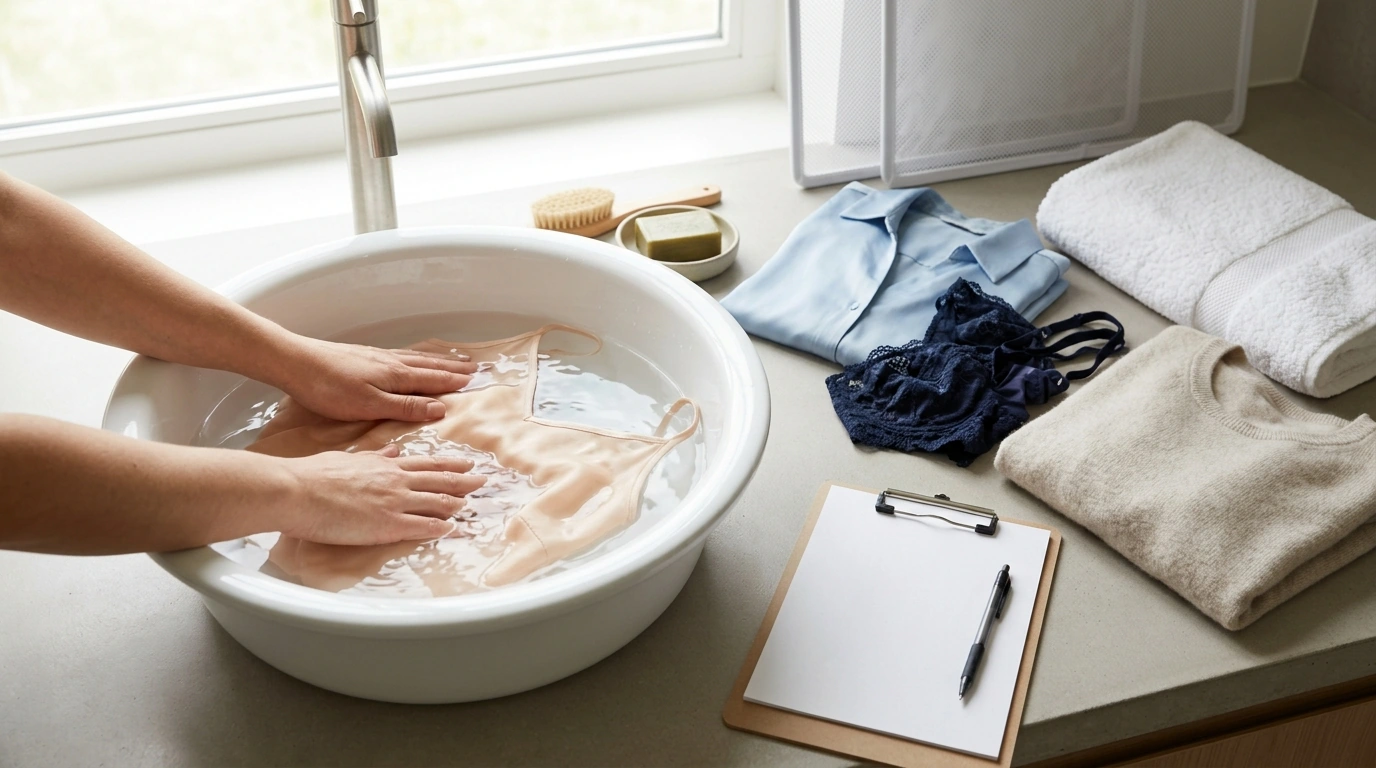
- Submerge the item and gently press it through the water; avoid twisting or scrubbing.
- Soak time: 5–10 minutes for most delicates; shorter for unstable dyes, longer only if the label allows.
- For lightly soiled areas (collars, underarms), use gentle squeezing and pressing motions; treat one small section at a time.
- Rinse with cool water until suds are gone; support the fabric’s weight to prevent stretching.
- Remove excess water by lifting and pressing the garment against the side of the basin—no wringing.
Quick Checklist: What to Do (and Avoid) During Hand-Washing
| Step |
Do |
Avoid |
| Mix detergent |
Dissolve detergent in water before adding garment |
Pour detergent directly onto fabric |
| Agitation |
Press and swish gently |
Scrub, twist, or wring |
| Soak time |
5–10 minutes for most delicates |
Long soaking for unstable dyes or embellished items |
| Rinsing |
Rinse until water runs clear, support garment weight |
Rinse under strong running water that stretches fibers |
| Water removal |
Press and towel-roll |
Wringing or twisting |
Drying Without Damage
- Use the towel-roll method: lay the garment flat on a towel, roll it up, then press to absorb moisture.
- Reshape while damp: align seams, smooth hems, and restore original dimensions—especially important for knits.
- Flat-dry sweaters, cashmere, and fine knits to prevent shoulder bumps and stretching. For fiber-specific tips, the Woolmark wool care guidance is a useful reference.
- Hang only if appropriate: use padded hangers for sturdy silk blouses; avoid hanging heavy wet garments that can grow longer as they dry.
- Keep away from direct heat and strong sun to reduce fading, yellowing, and fiber brittleness.
Delicate Fabric Notes (Silk, Lace, Wool, Lingerie, Embellishments)
Troubleshooting: Common Hand-Wash Problems
- Stiffness after drying: Detergent residue is common—rewash quickly in clean water or add an extra rinse. If you consistently see this, reduce detergent amount next time.
- Color bleeding: Stop immediately, rinse in cold water, and dry flat; wash similar colors together next time and shorten soak time for saturated shades.
- Stretching: Often caused by lifting wet knits without support—always scoop and support, then towel-roll and reshape.
- Pilling on knits: Reduce agitation and friction; wash inside out; keep items from rubbing against zippers or hooks.
- Lingering odor: Soak briefly in cool water with delicate detergent; ensure thorough rinsing and complete drying with airflow. For general laundry care best practices, the American Cleaning Institute’s fabric care resources can help refine your routine.
Make It a Repeatable Routine
- Create a small “delicates kit” (detergent, clean towel, stain blot cloth, drying rack space) so you’re not searching mid-wash. For tidy storage of small tools (cloth, travel detergent packets, stain swabs), an organizer like the Embroidery Daisy Pencil Case Large Capacity School Supplies Pouch works well beyond school supplies.
- Wash delicates on a consistent cadence: light-use items less often, but address stains immediately so they don’t oxidize or set.
- Store properly: breathable garment bags for special pieces; fold knits; avoid wire hangers for delicate straps.
- Track what works for your wardrobe: note which items prefer cold-only, shortest soak, or flat-dry only—then follow the same steps each time.
FAQ
What detergent is best for hand-washing delicate fabrics?
A gentle detergent formulated for delicates is the safest choice, especially for silk, wool, and embellished pieces. Skip chlorine bleach and aggressive stain removers, and always dissolve detergent in water before adding the garment.
How long should delicate clothes soak when hand-washing?
About 5–10 minutes works for most delicates. Reduce soak time for unstable dyes or embellished items, and follow the care label if it specifies a shorter window.
Can delicate fabrics be wrung out after rinsing?
No—wringing can stretch fibers, distort seams, and damage trims. Instead, press water out against the basin side, then use a towel-roll to absorb moisture before reshaping and air-drying.
Recommended for you







Leave a comment