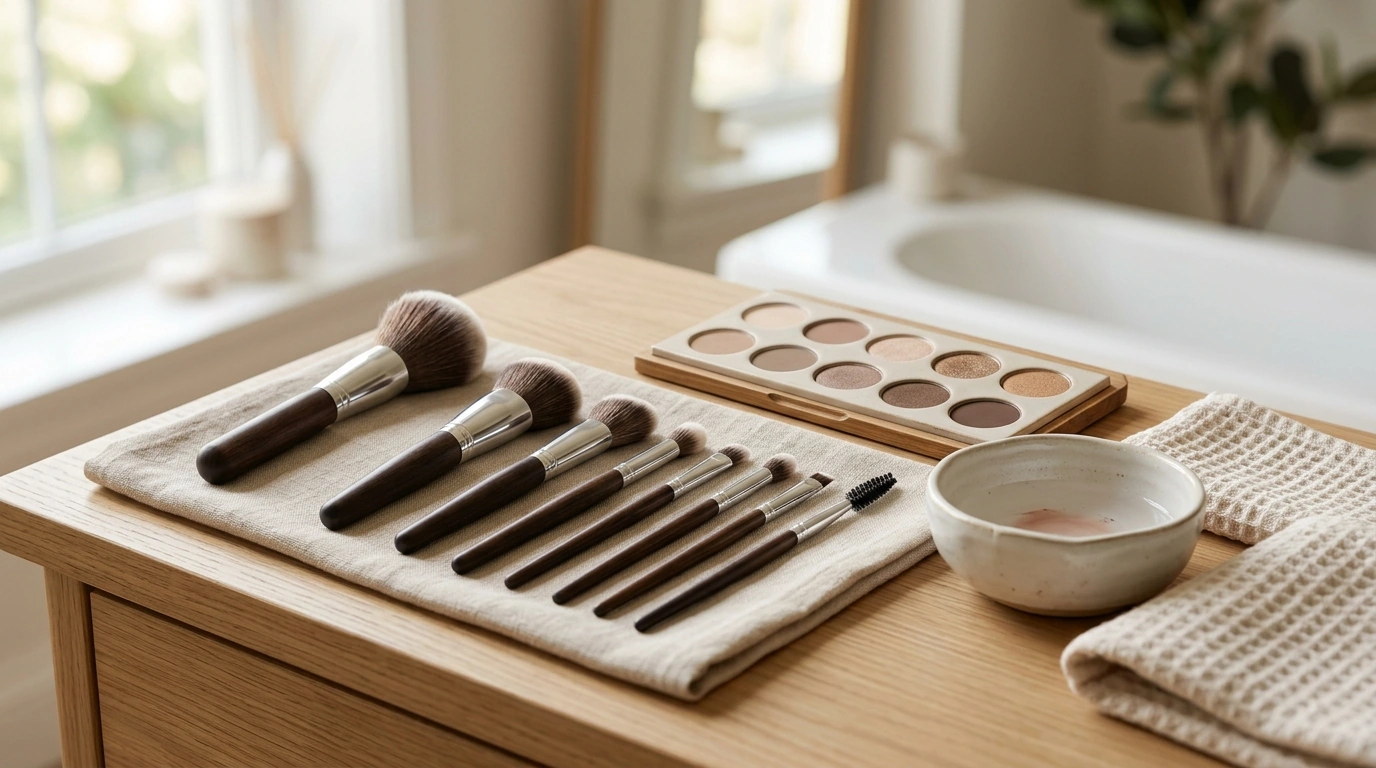
A well-chosen brush set can make everyday makeup faster, more even, and easier to blend. A professional face-and-eye set covers the core steps—base, contour, highlight, and detailed eye work—so products apply smoothly with less patchiness and less wasted formula. This guide breaks down what to look for in a quality set, how to use each brush type effectively, and how to keep brushes clean for better performance and skin comfort. For more guidance, see 4 Best Makeup Brushes of 2026, Tested by Experts.
A balanced set usually includes a few face staples plus eye brushes that handle both soft blends and sharper definition. For liquids and creams, denser bristles help place and move product without skipping; for powders, fluffier shapes diffuse edges and prevent harsh “stripes.”
| Brush shape/type | Best for | Use tip |
|---|---|---|
| Dense flat/top foundation brush | Liquid/cream foundation, smoothing base | Apply in thin layers; finish with light buffing to remove streaks |
| Tapered powder brush | Setting powder, bronzer, all-over blending | Tap off excess powder first; use sweeping motions for a soft veil |
| Angled cheek brush | Blush, bronzer, contour | Place color higher for lift; keep pressure light for buildable payoff |
| Small tapered highlighter brush | Highlight on cheekbones, brow bone, cupid’s bow | Use a gentle sweeping motion rather than pressing to avoid harsh shine |
| Flat shader eye brush | Packing shadow on the lid | Press pigment to intensify; sweep lightly to soften the edge |
| Fluffy blending brush | Crease blending and transition shades | Use small circular motions, then windshield-wiper strokes to diffuse edges |
| Smudger/detail brush | Lower lash line, outer corner, liner smudge | Work with minimal product; build slowly to avoid fallout |
When makeup looks patchy, it’s often from using too much product too quickly—or using a brush shape that doesn’t match the formula. A simple brush order keeps layers thin and controlled, so everything melts together instead of stacking up.
Even a minimal eye routine benefits from having one brush to place color and one brush to blend. The goal is to keep pigment where you want it, then soften the edges without wiping everything away.
Clean brushes simply perform better: they blend more evenly, keep colors true, and feel more comfortable on the skin. For practical cleaning guidance, the American Academy of Dermatology Association recommends regular washing to help remove buildup, oils, and residue. For broader cosmetics safety considerations, the U.S. Food & Drug Administration offers general consumer guidance.
Brushes used with liquid or cream products do best with weekly washing, while powder-only brushes can often be washed every 1–2 weeks. Wipe off excess pigment between uses, and always let brushes dry fully before storing.
It’s possible, but not ideal because leftover cream residue can grab powder and cause patchiness. If you need to switch, wash thoroughly and dry completely, or dedicate separate brushes by formula when you can.
Use a soft angled or fluffy cheek brush, tap off excess product, and build color in thin layers. Blend edges with light pressure (and a clean fluffy brush if available) to keep the finish smooth and diffused.





Leave a comment