6-Speed Massage Gun Guide: 4 Heads, 2500mAh Battery
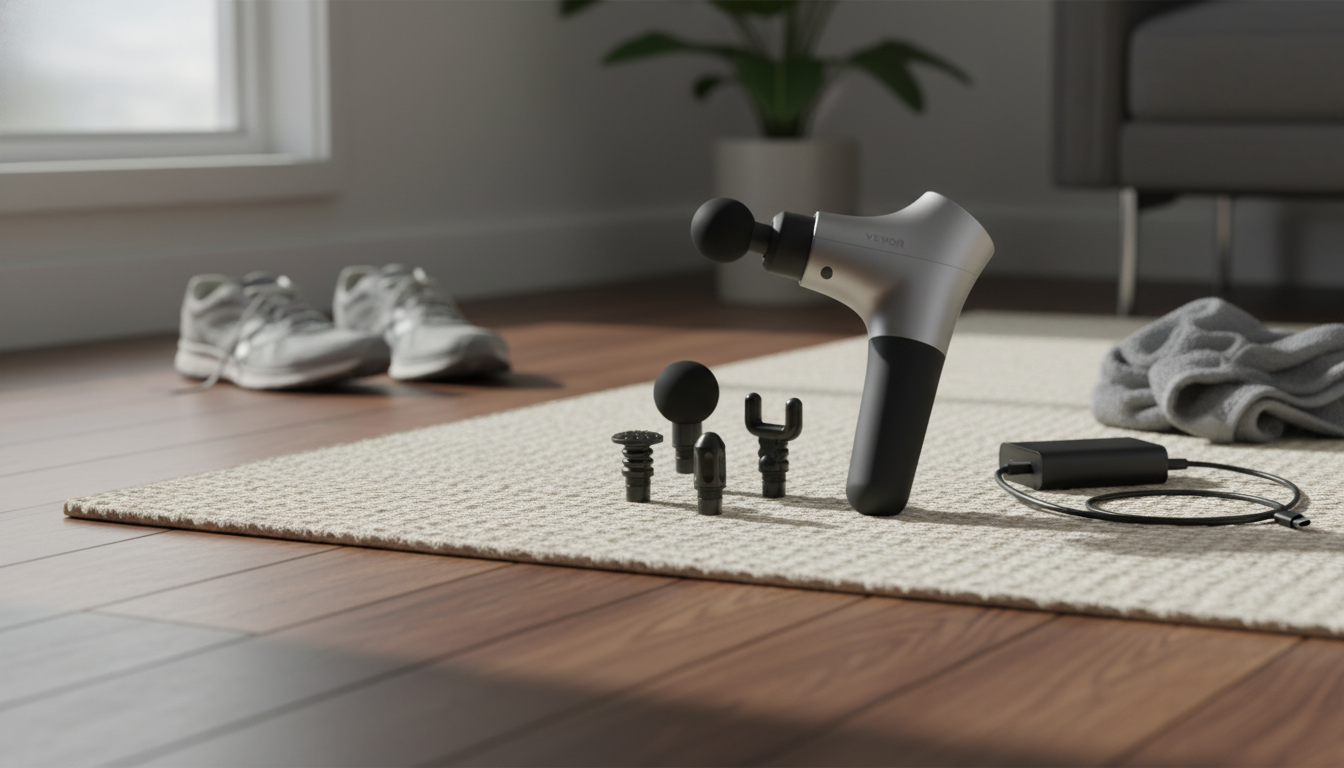
A compact percussion massager can help loosen tight areas after workouts or long days at a desk. This model pairs 6 adjustable speed levels with 4 interchangeable heads and a 2500mAh rechargeable battery, offering targeted pressure for different muscle groups and comfort preferences. For more guidance, see RENPHO Ascend Massage Gun Review: Adjustable Amplitude for ….
What This Massage Gun Is Designed To Do
Percussion massage works by delivering rapid, repeated pulses into soft tissue. Used thoughtfully, it can help relax tight muscles and improve short-term comfort after training, travel, or extended sitting. For further reading, see [PDF] ijspt joins oset 2021 – International Journal of Sports Physical Therapy.
- Delivers quick pulses to encourage muscle relaxation and post-activity comfort.
- Offers 6 speed levels so intensity can match the area and your tolerance.
- Supports spot treatment (knots and trigger points) and broader passes (quads, hamstrings, back, calves).
- Fits best as one part of recovery alongside hydration, stretching, and appropriate rest.
For general guidance on benefits and limitations, see Cleveland Clinic’s overview of massage guns and Harvard Health’s do’s and don’ts.
6 Speed Levels: How To Pick The Right Setting
The most comfortable sessions usually start gentler than expected. Begin at the lowest speed, then move up one level at a time until the muscle starts to “let go” without sharp pain.
- Lower speeds tend to feel better on sensitive areas (neck/upper traps, forearms) and during warm-up.
- Mid speeds are a practical choice for general post-workout recovery on medium-to-large muscles (glutes, quads, calves).
- Higher speeds are best saved for thick muscle groups and brief passes—avoid lingering in one spot.
- Use 30–90 seconds per area as a baseline, then reassess rather than pushing through discomfort.
| Speed range | Best for | Suggested time per area | Notes |
|---|---|---|---|
| Low (1–2) | Warm-up, sensitive areas, light recovery | 30–60 seconds | Keep pressure light; focus on slow passes |
| Medium (3–4) | General recovery on larger muscles | 60–90 seconds | Increase pressure gradually, avoid bony areas |
| High (5–6) | Brief deep work on thick muscle groups | 15–45 seconds | Do not “dig in”; reduce time if soreness spikes |
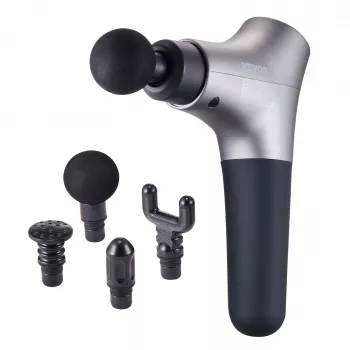
4 Interchangeable Heads: What Each One Is For
Attachments change how force spreads across the body. Broader heads distribute pressure more comfortably, while focused heads can target stubborn spots—but usually for shorter intervals.
- Use broader heads for large muscle groups to spread force and reduce “pinchy” sensation.
- Use focused heads for pinpoint tension, limiting time and pressure to reduce irritation.
- Match the head to the area: flatter contact for quads/back; more targeted contact for calves/feet/forearms.
- If numbness, tingling, or sharp pain occurs, stop and switch to a gentler head or lower speed.
| Head type (common use) | Where it works well | When to avoid |
|---|---|---|
| Ball (general purpose) | Quads, glutes, hamstrings, shoulders | Directly on bones or very tender bruised areas |
| Flat (broad contact) | Back muscles, chest/pecs, IT-band region (light pressure) | Over the spine or joints; keep moving |
| Bullet (pinpoint) | Trigger points, calves, plantar area (light) | Sensitive nerves/vessels; prolonged pressure in one spot |
| Fork (around tendons) | Along the sides of the spine, Achilles area (carefully) | Directly on the spine; inflamed tendons |
2500mAh Battery: Runtime Expectations and Charging Habits
A 2500mAh battery is well-suited for short daily sessions and occasional longer recovery routines. Runtime varies with speed level, applied pressure, and how long each session runs.
- Recharge after several sessions rather than running the battery completely flat to help maintain stable performance.
- If the device feels warm after an extended session, let it cool briefly before charging.
- For long storage, keep it partially charged and avoid leaving it fully depleted for weeks.
Comfort, Handling, and Noise Considerations
How the massager feels in-hand matters almost as much as power—especially for calves, upper traps, and hard-to-reach back areas.
- Use controlled, moderate pressure; excessive force can reduce comfort and may increase next-day soreness.
- Short, steady passes typically feel better than pressing hard into one spot.
- When working near the neck, stay on the muscle and avoid the front/side of the throat and carotid area.
How To Use It Safely and Effectively (Simple Routine)
This simple flow keeps sessions structured and avoids overdoing it on any single area.
- Warm-up: 30–60 seconds on low speed across the muscle (broad head), light pressure.
- Work phase: 60–90 seconds at a moderate speed, slow passes along the muscle fibers.
- Spot tension: 15–30 seconds on a tight point using a more focused head, then return to a broader pass.
- Cooldown: drop one speed level for 20–30 seconds to finish.
- Avoid: bruises, fresh injuries, open skin, swollen joints, and direct work over bones.
- If taking blood thinners, pregnant, or managing a medical condition, consider clinician guidance before frequent use.
Care, Cleaning, and Storage
Specifications Snapshot
Available Products
- Deep Tissue Percussion Massage Gun – 6 Speed Levels, 4 Heads, 2500mAh Battery
- Rechargeable Sonic Electric Toothbrush with USB Charging & Replacement Heads
- Sonic Electric Toothbrush
FAQ
How long should a percussion massage session last?
For most people, 5–15 minutes total is a practical range, with about 30–90 seconds per muscle group. Use shorter times on sensitive areas and when using higher speeds.
Which head should be used for tight calves and feet?
For calves, the ball head is a comfortable starting point, and the bullet head can be used briefly on tight spots with light pressure. For feet, keep the speed low and avoid pressing into areas that feel sharp or “electric.”
Can a massage gun be used every day?
Daily use can be fine if sessions stay moderate and comfortable. If soreness, tenderness, or bruising increases, reduce intensity or take a rest day and avoid irritated or injured areas.




Leave a comment