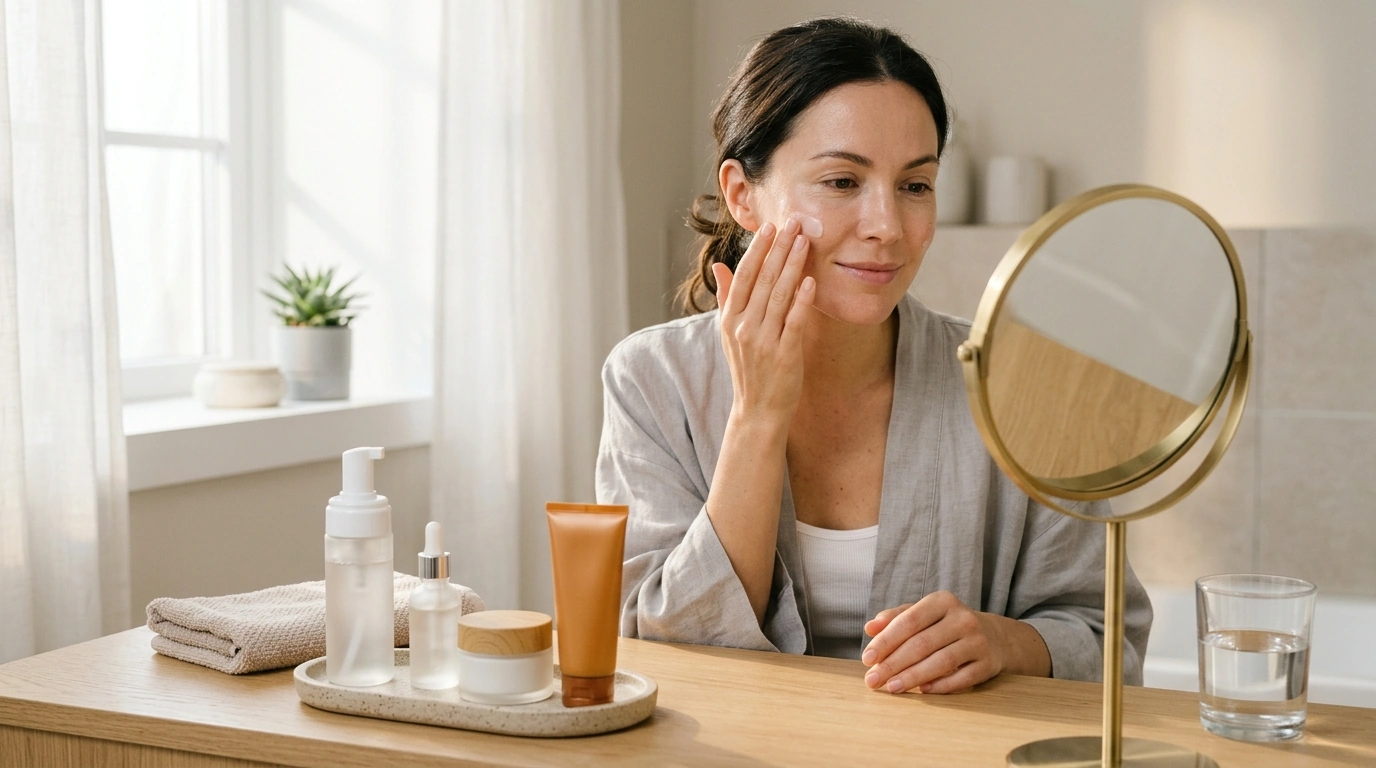
A reliable morning routine can make skin look brighter, feel calmer, and stay more resilient throughout the day. The goal isn’t a 14-step marathon—it’s a practical sequence you can repeat without thinking, with simple timing rules and layering habits that reduce irritation, prevent pilling, and keep your glow steady from morning to night.
A “glowy” morning routine is really three outcomes done consistently: cleanse gently, hydrate well, and protect daily. Everything else is optional and should only be added if it fits your skin and your schedule.
On busy mornings, fewer steps win. Consistency beats complexity. To avoid product balling and patchy makeup, layer from thinnest to thickest textures, and give each layer 30–60 seconds to settle (especially before sunscreen, and again before makeup).
If your skin feels normal or oily in the morning, use a gentle cleanser. If it feels tight, sensitive, or dry, a lukewarm water rinse may be enough. Avoid hot water and aggressive scrubbing—both can rough up the skin barrier and make redness more noticeable.
Apply a hydrating toner/essence or a simple humectant serum (like glycerin or hyaluronic acid) while skin is still slightly damp. This helps hydration spread evenly and reduces that “sticky layer” feeling.
Choose one targeted active based on what you want to improve, and keep the rest of the routine gentle:
If your skin gets easily irritated, start with a lower frequency (2–3 mornings a week) and build slowly.
Moisturizer reduces water loss and supports the barrier so skin stays comfortable throughout the day. Pick texture based on skin type: gel-cream for oily skin, lotion for normal/combination, and richer cream for dry or tight-feeling skin.
Finish with broad-spectrum sunscreen every day. Apply generously and don’t forget the neck, ears, and hands. For guidance on daily use and why it matters, see the American Academy of Dermatology Association sunscreen FAQs and the CDC sun safety tips.
Makeup-friendly tip: let sunscreen set for a few minutes, then keep base products thin to reduce pilling.
| Step | What it does | How long to wait | Common mistake to avoid |
|---|---|---|---|
| Cleanse | Removes overnight oil/sweat without stripping | 0–30 sec | Using hot water or harsh scrubs |
| Hydrate | Boosts water content so skin looks plumper | 30–60 sec | Applying to bone-dry skin |
| Treat (optional) | Targets specific concerns (dullness, redness, breakouts) | 60 sec | Stacking multiple strong actives daily |
| Moisturize | Reduces water loss and supports barrier | 60 sec | Skipping moisturizer when using hydrating serum |
| Sunscreen | Prevents UV damage and uneven tone | 2–5 min before makeup | Using too little or forgetting neck/ears |
This three-step version is your “never skip” baseline. If you do nothing else, do this.
For a simple, structured checklist you can follow day after day, keep the Fresh Start Glow morning beauty routine guide on hand and treat it like a morning “playlist” you can repeat.
When energy is low, use a structured checklist and do the minimum effective routine: gentle cleanse (or rinse), moisturize, sunscreen. Adjust only one variable at a time—product, frequency, or amount—so you can tell what actually helps. If irritation shows up, simplify for a week and then reintroduce actives slowly. A healthier barrier often looks brighter on its own; if you want to learn why irritation can spiral, DermNet’s overview of the skin barrier and irritant dermatitis is a helpful reference: DermNet NZ.
Go from thin to thick: cleanse → hydrate → treat (optional) → moisturize → sunscreen. Wait briefly between layers, and always keep sunscreen as the last skincare step before makeup.
Most people do, because serums add hydration while moisturizer helps seal it in and support the skin barrier. If you’re extremely oily you may use a very light moisturizer, but sunscreen still needs to go on top every morning.
Hydration and smoothness can look better within a few days, especially when you stop over-stripping the skin. More noticeable changes in tone and texture usually take several weeks, and daily sunscreen is one of the biggest factors in keeping results steady.







Leave a comment