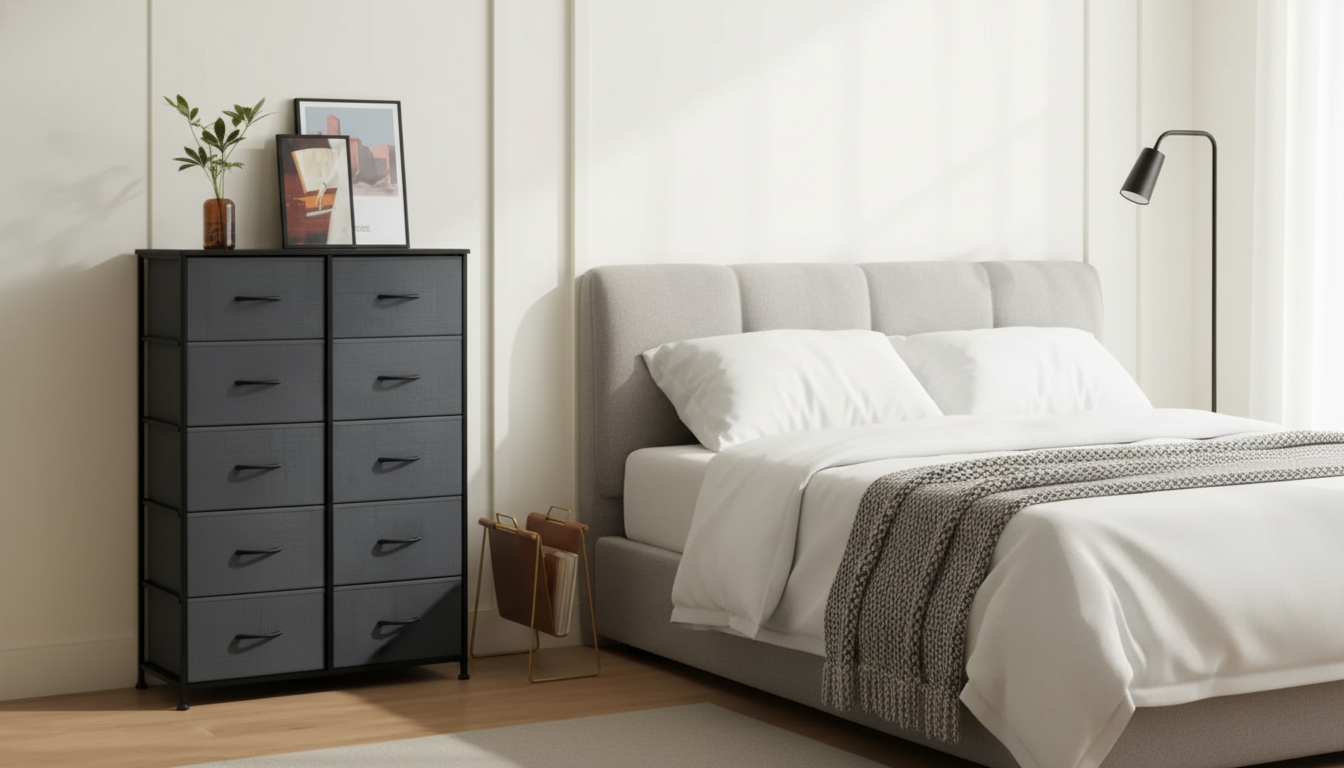
A bedside table should keep essentials close while quietly handling clutter. This modern 10-drawer nightstand pairs soft fabric drawers with a sturdy steel frame to create easy, flexible storage for bedrooms, guest rooms, dorms, and small-space layouts—without the bulk of traditional wood furniture. The result is a calm-looking surface up top and a surprisingly organized “home base” underneath for the items that tend to drift across a nightstand, dresser, or floor.
If you’re outfitting a guest room, upgrading a dorm setup, or trying to make a small bedroom feel less busy, a drawer-heavy nightstand is one of the simplest upgrades: it reduces the “everything lives on the top” habit and makes daily resets faster.
Nightstands work best when they reflect what you do every day: charge devices, apply lotion, find glasses, stash hair ties, and keep a book nearby. With ten drawers, it’s easier to separate high-rotation items (used nightly) from backups (used occasionally), so the top stays usable instead of becoming a landing pad.
| Drawer Area | Best For | Quick Tip |
|---|---|---|
| Top 2–4 drawers | Nightly essentials (skincare, glasses, meds) | Use small pouches to keep items upright and easy to grab |
| Middle drawers | Tech accessories (chargers, cables, remotes) | Label one drawer as “charging” to avoid cord tangles |
| Bottom drawers | Backups (linens, spare toiletries, seasonal items) | Rotate seasonally to keep daily items within reach |
For everyday fabric care fundamentals—like avoiding harsh chemicals and following common-sense cleaning steps—general textile guidance can be helpful. The FTC’s care labeling overview is a practical reference for how fabrics are typically maintained: Federal Trade Commission: Care Labeling of Textile Wearing Apparel & Certain Piece Goods.
For households with kids or active pets, placement matters: keep the unit on a flat surface, avoid overloading upper drawers, and consider anchoring strategies where appropriate. For general stability and safe placement guidance, see: CPSC: Tip-Over Prevention.
| Feature | Fabric Drawers + Steel Frame | Traditional Wood Nightstand |
|---|---|---|
| Weight & portability | Usually lighter and easier to move | Usually heavier and more difficult to reposition |
| Organization | Many drawers for sorting small items | Often fewer drawers; larger compartments |
| Noise | Generally quieter drawer movement | Varies by hardware and build quality |
| Care | Spot-clean fabric; dust frame | Wipe/clean wood finish; may scratch or dent |
| Best for | Small spaces, flexible layouts, everyday sorting | Heavier loads, classic furniture styling |
With normal use, fabric drawers are designed to keep their shape, especially when items are spread across multiple drawers. Avoid overloading a single drawer, and place heavier items lower to reduce long-term strain.
It can work well for smaller clothing items and accessories, making it a strong option for dorms, kids’ rooms, or small wardrobes. For larger folded stacks (like jeans or bulky sweaters), it’s often best as supplemental storage alongside a closet or main dresser.
Dust the steel frame regularly, then spot-clean the fabric drawers with mild soap and water. Let the fabric dry completely before reinserting drawers, and avoid soaking or using harsh cleaners.





Leave a comment