3-Ton Triple Bag Air Jack: Fast Lift, Safer Setup
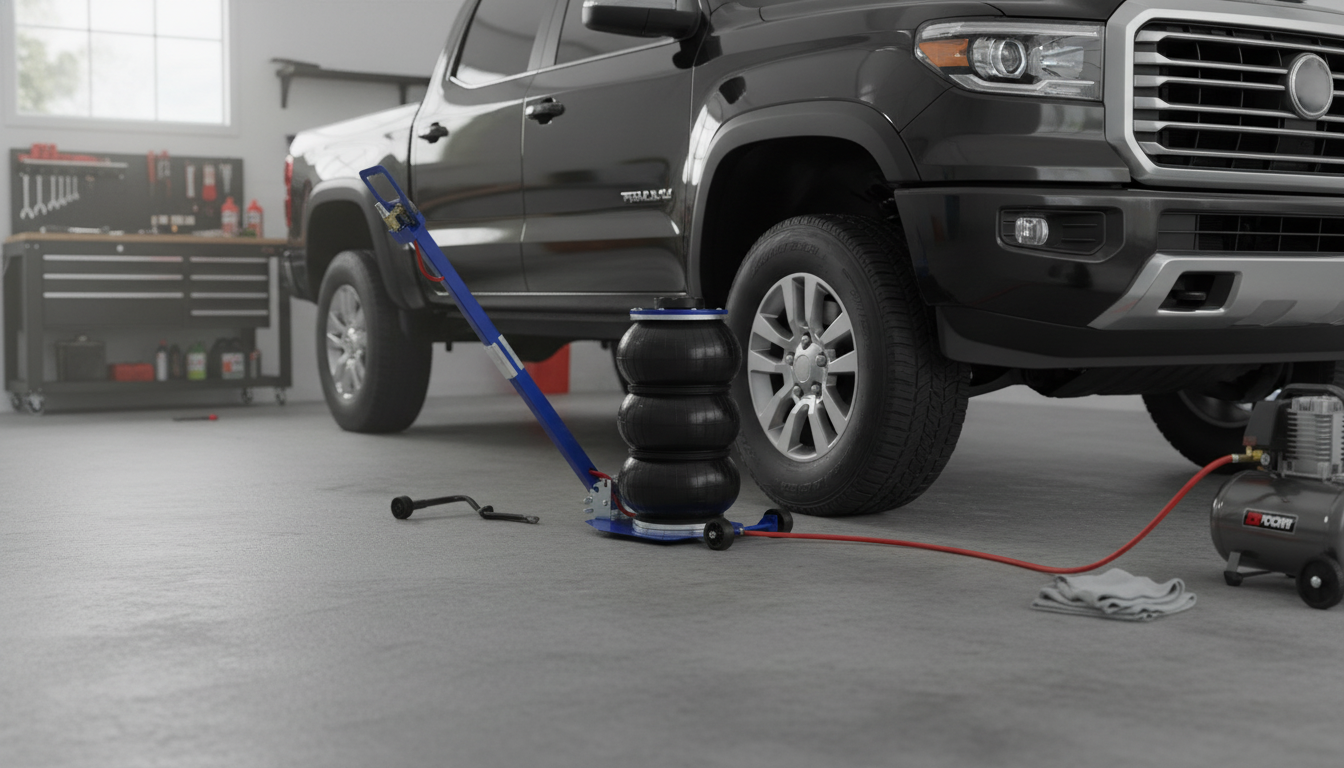
3-Ton Triple Bag Air Jack with Fast Lift & Adjustable Handle
A triple-bag air jack is built for quick lifts with less effort—especially useful for roadside work, garage maintenance, and uneven surfaces where a broad, stable base helps. This guide covers how this 3-ton model works, what to expect in day-to-day use, and how to operate it safely with the right support equipment.
If you’re shopping for a fast, practical air-powered option, see the 3-Ton Triple Bag Air Jack with Fast Lift & Adjustable Handle.
What a triple-bag air jack does (and why the design matters)
Unlike a traditional scissor jack or manual hydraulic floor jack that relies on repeated pumping, a triple-bag air jack uses compressed air to inflate stacked air bags. As the bags expand, they raise the vehicle with minimal physical effort—especially helpful when speed and reduced strain matter.
- Compressed-air lifting: Connect an air source and let airflow do the work, reducing fatigue during repeated lifts.
- Triple-bag construction: Stacked bags help increase lift height while keeping a wide footprint, which can feel steadier on imperfect ground.
- Fast-lift behavior: Once air starts flowing, the jack typically rises quickly—handy for wheel swaps, brake checks, and quick inspections (with proper jack stands).
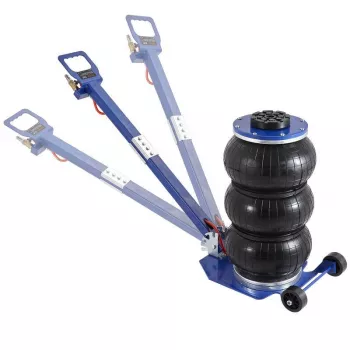
- Adjustable handle control: An adjustable handle can help you guide the jack under lift points and side skirts without crawling as far under the vehicle.
Key features to look for on this 3-ton model
Capacity and control matter more than “maximum lift” marketing. A well-chosen air jack should match your vehicle, your air supply, and the surfaces you commonly work on.
- 3-ton (6,000 lb) rated capacity: Suitable for many passenger vehicles and light-duty use, but always confirm your vehicle’s weight and the manufacturer-approved lifting points.
- Fast lift: Faster rise reduces time spent exposed at the roadside and can streamline routine shop tasks.
- Adjustable handle: Helps with reach and leverage, and can keep your hands farther from pinch points while you position the jack.
- Wide base contact: Often more forgiving on asphalt, compacted gravel, and garage floors. On softer ground, a sturdy board or pad is still recommended to reduce sinking.
- Smoother control via valve/airflow: Controlled inflation helps prevent sudden shifts as you approach your target height.
For general safety reminders when handling equipment and loads, review OSHA’s guidance on safe practices: OSHA — Materials Handling and Storage.
At-a-glance specs and buying checklist
Before buying (or before your first lift), confirm these practical fit-and-setup points. The goal is to avoid forcing the jack into place, overextending the lift, or using an air source that can’t deliver steady airflow.
- Capacity vs. corner load: The load on one corner can be higher than expected depending on engine placement, cargo, and angle of the surface.
- Minimum and maximum height: Minimum height determines whether it fits under low vehicles; maximum height affects wheel-off clearance.
- Air supply compatibility: Confirm fittings, pressure range, and whether your compressor (or onboard air) can deliver consistent airflow.
- Support plan: A jack lifts; jack stands support. Have appropriately rated stands ready before you start.
- Portability: Consider storage size, handle design, and whether it’s easy to carry and stow in a trunk.
Quick checklist for setup and compatibility
| Item | What to check | Why it matters |
|---|---|---|
| Vehicle clearance | Minimum height fits under lift point | Prevents forced placement and instability |
| Lift range | Maximum height provides wheel-off clearance | Avoids overextension or unsafe stacking |
| Air source | Compressor/air system can supply steady airflow | Ensures consistent lift and control |
| Surface support | Use a board/pad on soft ground | Reduces sinking and lateral shift |
| Support equipment | Jack stands rated appropriately | Prevents collapse while working |
How to use an air bag jack safely (step-by-step)
Air jacks can lift quickly, so preparation and control are essential. If you’re performing a roadside tire change, follow the general safety steps from the National Highway Traffic Safety Administration: NHTSA — Changing a Tire.
Best-use scenarios and where it may not be the right fit
Care, storage, and longevity tips
In-stock picks
- 3-Ton Triple Bag Air Jack with Fast Lift & Adjustable Handle (In stock)
- Rechargeable Sonic Electric Toothbrush with USB Charging & Replacement Heads (In stock)
FAQ
Can a 3-ton air bag jack lift an SUV?
It can, as long as the SUV’s weight and the load on the lifted corner are within the jack’s rated capacity and you lift from approved points. Confirm curb weight and always support the vehicle with properly rated jack stands before working.
Does an air bag jack need a compressor?
It needs a compatible air source, which can be a shop compressor or an onboard air system that provides sufficient pressure and steady airflow. Confirm the fittings match and inflate in a controlled way to prevent sudden movement.
Is it safe to work under a vehicle supported only by an air bag jack?
No. A jack is intended for lifting, not supporting; once the vehicle is raised, set it onto properly rated jack stands on solid ground before any under-vehicle work.





Leave a comment