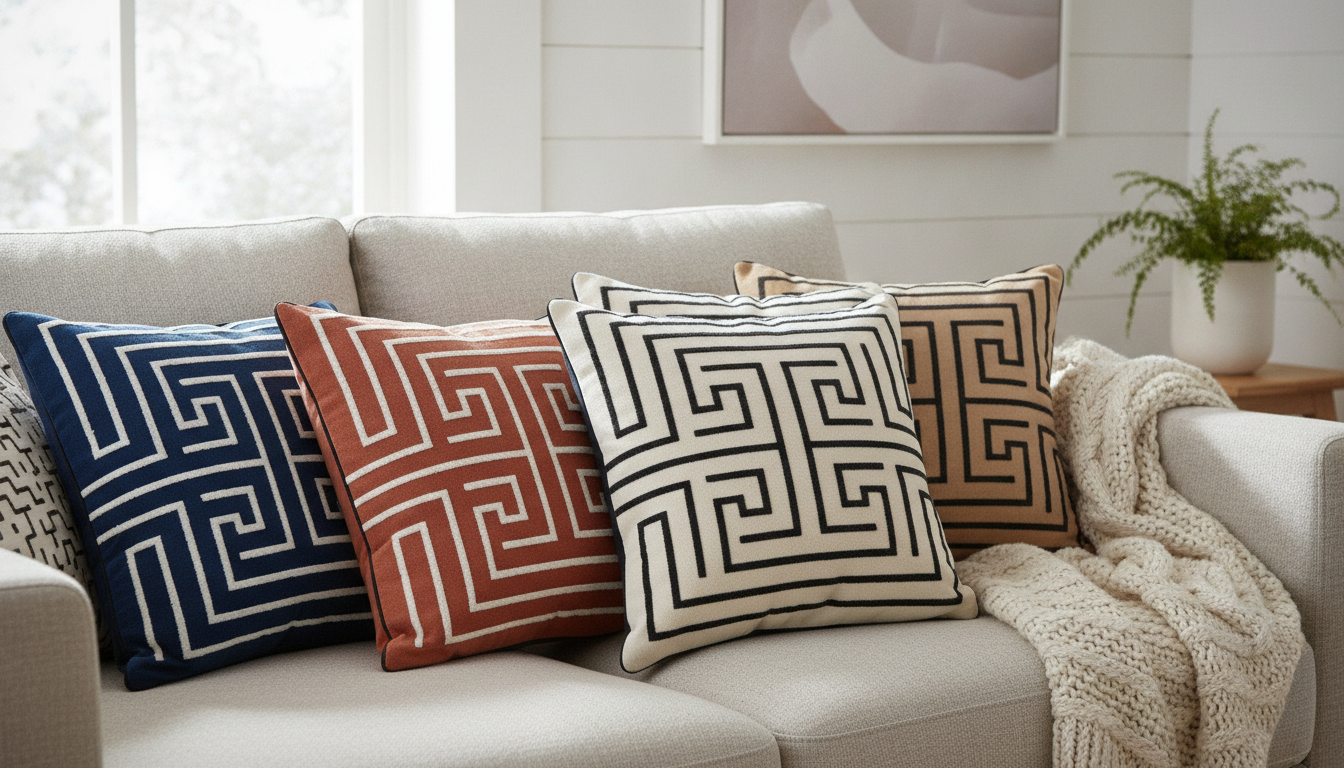
A textured cushion cover can change the feel of a whole room—adding depth, softness, and a focal point without rearranging furniture. This modern chenille cover pairs a tactile finish with an abstract labyrinth motif that suits contemporary, minimalist, and eclectic spaces, while still feeling inviting for everyday lounging.
Abstract patterning has a way of looking intentional without feeling overly formal, and a labyrinth motif is especially effective because it balances structure with visual flow. Instead of a literal print, the design reads like a sculptural outline—bringing movement to a sofa or bed the same way a striking framed piece elevates a wall.
For an easy refresh, treat the labyrinth pillow as the statement piece, then keep surrounding pillows simpler—solid linen-look covers, matte cotton, or a subtle ribbed texture.
Chenille is known for its plush, velvety hand-feel, which makes a room look warmer even when the color palette is minimal. The pile also adds dimension; you’ll notice the pattern shifts slightly as light changes throughout the day, so the pillow feels dynamic rather than flat.
In practice, chenille is a smart “bridge” material: it can soften modern lines (sleek couches, metal frames) while still looking clean and contemporary.
Place the labyrinth cover as the centered accent on a sofa to create a focal point, or use two—one on each end—to frame a solid lumbar pillow. If your couch is a strong color (navy, olive, rust), the abstract design adds structure without fighting the hue.
Layer it in front of larger shams for a boutique-hotel effect. The chenille texture adds that “finished” look to a made bed, especially when the rest of the bedding is crisp and smooth (percale or sateen).
A single textured pillow can make a work chair or compact loveseat look more inviting. Choose tones that echo nearby elements—art prints, a rug border, or wood finishes—so the pattern looks curated rather than random.
This is where a sculptural pillow earns its keep. The labyrinth motif turns a practical seat into an intentional vignette, especially when paired with a woven basket, a simple tray, or a single throw blanket.
The insert determines whether your pillow looks relaxed and lounge-ready or crisp and architectural. A common designer trick is to use an insert slightly larger than the cover to create a fuller profile and more defined edges.
| Goal | Insert feel | Visual effect | Best placement |
|---|---|---|---|
| Plush lounge comfort | Soft (down or down-alternative) | Relaxed, cozy silhouette | Sofa corners, reading chair |
| Clean modern lines | Medium-firm poly | Sharper edges, structured look | Center sofa accent, bed layering |
| Statement focal point | Slightly fuller insert | More volume and texture emphasis | Single chair, entry bench |
Textured fabrics look best when the pile stays even and lifted. A few small habits—especially after heavy use—help chenille maintain its signature softness and defined pattern.
For a quick reference on textile care labeling, the ISO guidance on care symbols is a helpful standard: Textile care symbols and guidance (ISO). For general home laundering and dryer safety basics, see: U.S. CPSC laundry safety guidance.
If the goal is a fast room refresh with a modern edge, the labyrinth motif does the heavy lifting: it adds pattern, texture, and a gallery-like focal point while still feeling cozy for everyday use.
This is typically a cover-only item, so plan to choose a pillow insert separately. For a fuller, tailored look, many decorators size the insert slightly larger than the cover so the pillow looks more substantial.
Check the care label first, then stick to gentle spot-cleaning when possible and avoid high heat that can crush the pile. Light brushing after drying helps keep the texture even and the pattern looking defined.
Modern, minimalist, Scandinavian, and eclectic rooms all pair well with this kind of graphic motif. It looks especially polished alongside solid pillows, natural textures like wood or woven accents, and clean metal finishes.


Leave a comment