AI Mental Fitness Checklist: Daily 5-Minute Mind Care
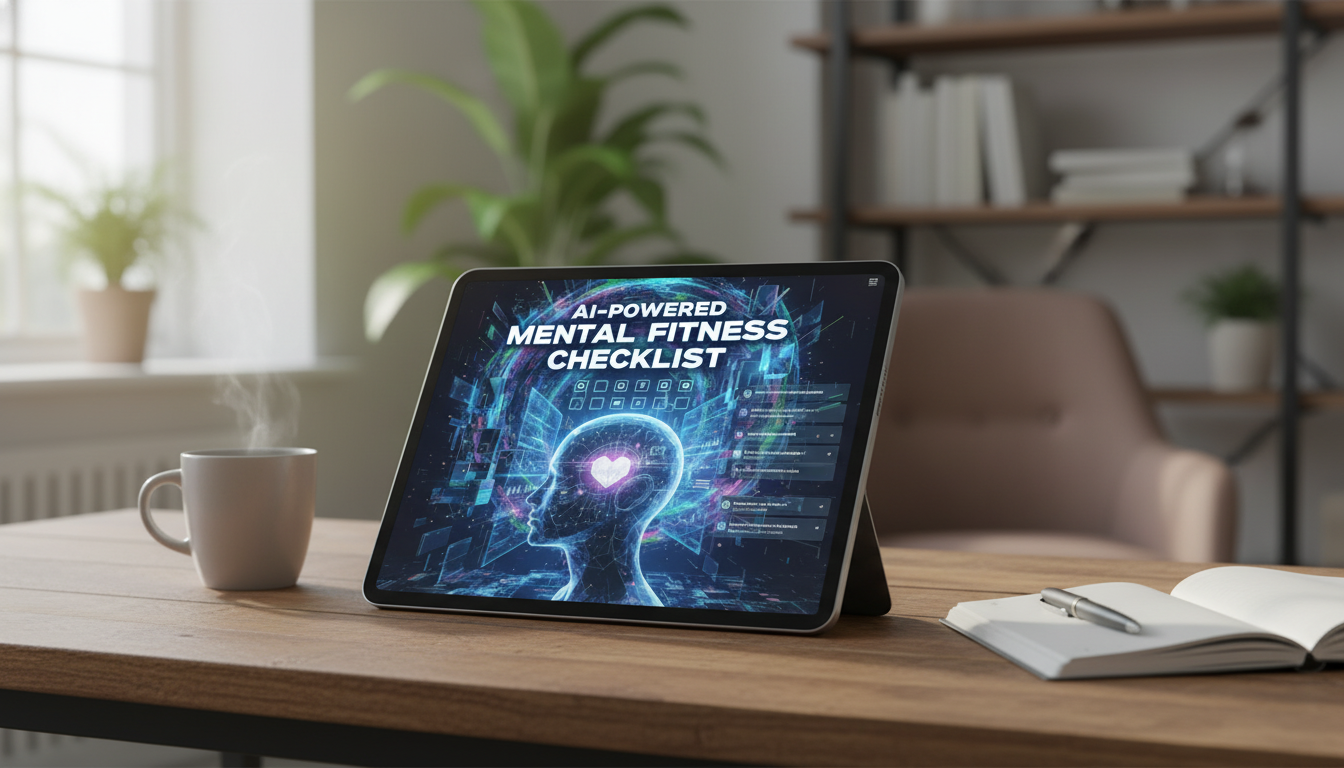
AI-Powered Mental Fitness Checklist: A Smart, Simple Routine for Daily Mind Care
Mental fitness improves most when it’s practiced consistently, in small steps that match real life. A digital checklist can turn scattered self-care ideas into a repeatable routine—especially when you use AI as a helper to suggest exercises based on mood, time, and goals. This approach keeps things practical: check in, choose one doable action, note what changed, then move on with your day.
It also fits into modern schedules. Whether you prefer a printable page on the fridge, an interactive file you update on your phone or laptop, or a weekly reset ritual on Sunday, the structure stays the same—simple, human, and sustainable.
What a mental fitness checklist does (and what it doesn’t)
A mental fitness checklist supports day-to-day skills that protect wellbeing: emotion regulation, attention control, stress recovery, social connection, and a sense of meaning. Instead of relying on motivation alone, a checklist reduces decision fatigue by narrowing your next step to one small action you can complete quickly.
What it doesn’t do: it doesn’t diagnose conditions, replace therapy, or handle emergencies. If symptoms feel severe, persistent, or risky—such as thoughts of self-harm, panic that won’t settle, or inability to function—professional support is the priority. For background on how stress affects the body, the American Psychological Association is a helpful reference, and the National Institute of Mental Health offers practical guidance for everyday mental health care.
What’s inside the digital download
The download is designed to work as a printable checklist, an interactive eBook, or a hybrid of both. The goal is to keep your routine repeatable—so you can build momentum from small wins rather than waiting for the “perfect” time to reset.
- Printable pages for daily and weekly use: quick check-ins, reflection prompts, and habit tracking.
- Interactive fields to record stress triggers, energy levels, sleep quality, and coping tools that worked.
- AI guidance instructions: how to ask for exercise ideas that fit the time you have (2, 5, 10, or 20 minutes) and your current mood.
- A repeatable structure: check-in → choose exercise → do it → rate impact → plan next step.
Ways to use the checklist
| Format | Best for | How it fits into a day |
|---|---|---|
| Printable (daily) | Morning or evening routine | 2–5 minutes to pick one action and track completion |
| Printable (weekly) | Weekend reset | 10–15 minutes to review patterns and plan supports |
| Interactive eBook | Typing notes and keeping everything in one file | Quick check-ins plus longer reflections when needed |
| Hybrid (print + digital) | People who like writing and data | Print for habits; use digital for reflections and summaries |
How to pair AI suggestions with the checklist (without overcomplicating it)
AI works best here as a menu generator, not an authority. You stay in charge; AI simply helps you brainstorm options that match your constraints.
- Start with a fast self-rating: stress (0–10), mood (low/neutral/high), energy (low/medium/high), focus (scattered/steady).
- Pick one goal: calm down, refocus, build resilience, reconnect, or recharge.
- Ask for options, not answers: request 3–5 exercise ideas and choose the one that feels most doable right now.
- Keep it specific: include time limit, environment (at desk, in bed, outside), and constraints (quiet, privacy, no equipment).
- Log the result: note what you tried, how it felt, and whether to repeat or swap next time.
This method prevents the common trap of collecting advice without taking action. The checklist makes the action step unavoidable—and small enough to finish.
Exercise menu: quick mental health habits the checklist can rotate
Rotating a short list of “go-to” skills helps you build confidence. When your mind is tired, you won’t need to invent a plan; you’ll just select one tool and start.
- For stress relief: paced breathing, progressive muscle relaxation, 5-4-3-2-1 grounding, a short walk, gentle stretching.
- For focus: 10-minute single-task sprint, a distraction list, tidy-one-thing reset, soundscapes, attention anchoring.
- For emotional clarity: name the emotion, identify the need, 3-sentence journal, self-compassion break.
- For connection: send one supportive message, plan a low-pressure meet-up, gratitude note, repair a small misunderstanding.
- For sleep support: light-dimming routine, no-screen buffer, body scan, worry list + next-step plan.
A simple weekly rhythm to make progress visible
Consistency beats intensity. One small check-in each day builds awareness, and a weekly review turns that awareness into smarter choices.
Product picks that support the routine
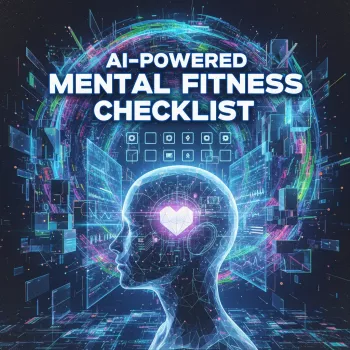
- AI-Powered Mental Fitness Checklist (digital download) — a structured daily/weekly system designed for quick check-ins and repeatable micro-habits.
- Embroidery Daisy Pencil Case Large Capacity School Supplies Pouch — an easy way to keep printed pages, pens, and note cards together so the routine stays visible.
- Rechargeable Sonic Electric Toothbrush with USB Charging & Replacement Heads — pairing one calming mental habit with an existing morning/evening routine can make follow-through easier.
Safety and boundaries when using AI for mental wellbeing
Download details and who it’s best for
FAQ
Do I need special apps or subscriptions to use the checklist?
No. It’s a digital download you can print or use as an interactive file, and it works on its own. If you want AI-generated exercise ideas, you can use commonly available AI tools, but they aren’t required to use the checklist.
How often should the checklist be used to notice a difference?
A realistic cadence is a 2–5 minute daily check-in plus a weekly review. Track stress, mood, and sleep for 2–4 weeks to spot patterns; consistency usually matters more than longer sessions.
Is it safe to use AI for mental health exercises?
It can be safe when used for idea generation and habit support—not diagnosis or crisis guidance. Keep privacy in mind, avoid sharing identifiable details, and seek professional help promptly if symptoms are severe, persistent, or escalating.





Leave a comment