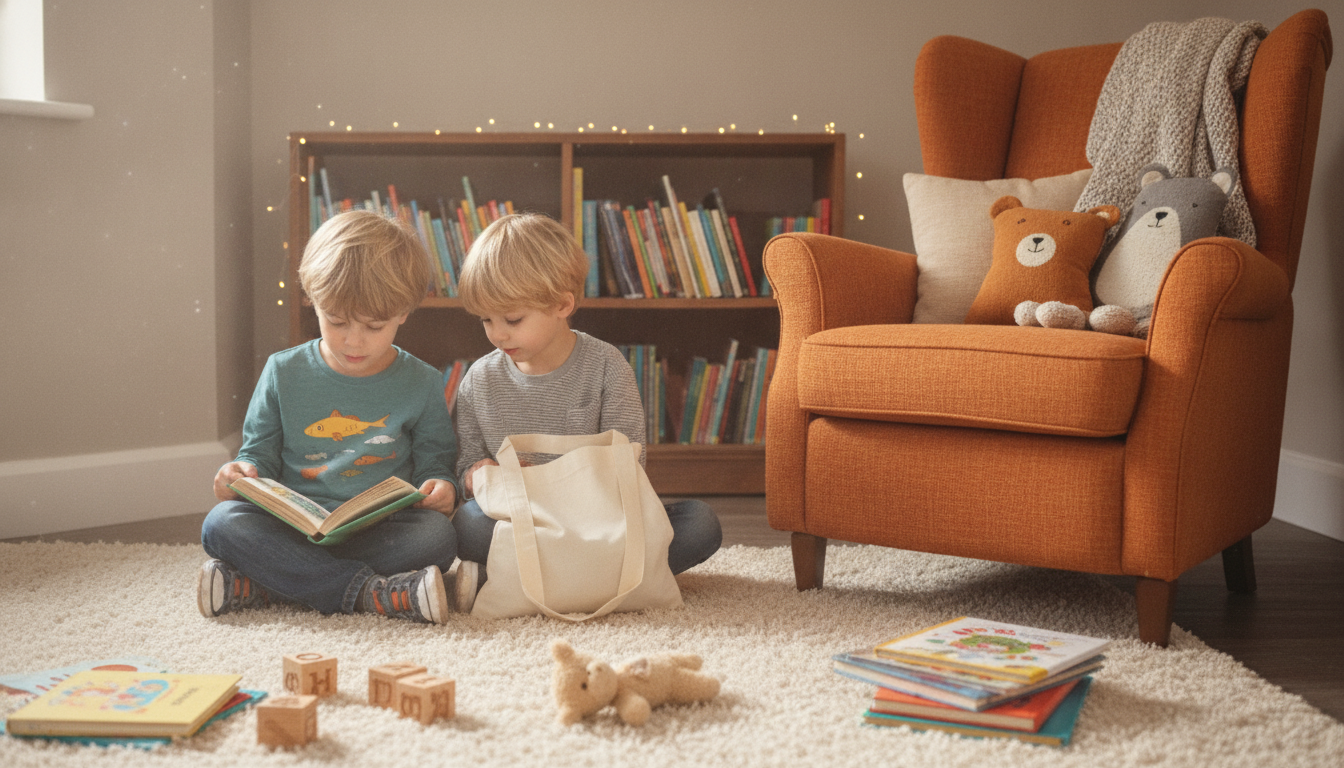
A kids’ home library does not need a spare room or a huge budget. With a clear checklist, a few kid-friendly storage choices, and a cozy reading corner that fits the space you have, it becomes easier to keep books visible, rotating, and genuinely inviting for daily reading. The goal is simple: make books easy to reach, easy to choose, and easy to put back—so reading happens more often without feeling like another chore. For more guidance, see Creating a Home Library | Reading Rockets.
Before you buy anything, choose the place where the library will live and what you want it to do. A “library map” can be as basic as pointing to one corner and deciding, “This is where books belong.” For further reading, see How to Build a Home Library for Your Montessori Child.
If bedtime reading is the goal, place the library near the bedroom or the spot where pajamas and toothbrush time happen. Small cues in the environment can turn reading into an automatic next step.
Kids choose what they can see—and what they can reach. The fastest way to get more reading is to make browsing feel effortless.
| Storage type | Best for | Tip to keep it tidy |
|---|---|---|
| Book ledges (wall-mounted) | Toddlers to early elementary, cover browsing | Mount low and leave space between ledges so books don’t overlap |
| Low bookshelf | Mixed ages, larger collections | Sort by theme or series and keep a “featured” shelf for current favorites |
| Baskets/bins | Board books, thin paperbacks, quick cleanups | Label bins with pictures + words for easy resets |
| Rolling cart | Small spaces, rotating selections | Use top tier for current reads and bottom for “next up” |
A magical library isn’t about owning hundreds of books—it’s about having the right handful within reach. Start smaller than you think, then adjust as you learn what gets reread.
For families who want evidence-based encouragement, the American Academy of Pediatrics shares practical guidance on reading with young children, and Reading Rockets offers ideas for building a reading culture at home.
Think “soft landing spot,” not “perfect Pinterest nook.” The reading corner should invite your child to sit down quickly and stay awhile.
A small “reading tools” pouch can also help: keep bookmarks, a book light, a timer, or a reading passport together so the corner resets in seconds. The Embroidery Daisy Pencil Case Large Capacity School Supplies Pouch works well as a simple grab-and-go organizer for those little extras.
If bedtime is when reading sticks best, pairing it with a consistent routine helps. Even something as practical as setting up bathroom-to-books flow can reduce resistance on tired evenings; the Rechargeable Sonic Electric Toothbrush with USB Charging & Replacement Heads can support a predictable “brush, then books” rhythm.
For a ready-made, family-friendly plan, use Build Your Magical Kids’ Library: A Fun & Easy Checklist (Printable Guide) to map the spot, choose storage, and keep the cozy corner running week after week.
Start with a visible set of about 20–40 books (depending on age and space) and rotate additional titles from storage. Keeping the selection smaller helps kids browse quickly and prevents overwhelm.
Organize by theme, series, or “mood” (funny, cozy, facts) so kids can choose based on what they feel like reading. For younger children, combine a few front-facing books with simple labeled bins to make cleanup easy.
Use vertical or compact storage, one comfortable seating option, warm task lighting, and a small basket for current reads. Defining the corner with a small rug or a piece of wall art helps it feel special without taking up extra room.





Leave a comment